 info@worldgreeneconomy.org




WGEO at COP30
 10th-21st November 2025
  Belém, Brazil
Tuesday, 11 November 2025
Local Climate Innovations for Bioeconomy & Sustainable Tourism
The Role of Trade in Global Energy Transition

Panel Members

Jorge Arbache
University of Brasilia and ICS

Mônica Sodré
CEBRI

Mathilde Mesnard
OECD

Ricardo Assumpção
EY

Bruno Quick
SEBRAE
Background
International trade can shift from being a climate challenge to becoming a catalyst for global decarbonization. By integrating the concepts of Green Comparative Advantage and powershoring, it shows how the strategic location of industrial production to regions with abundant and competitive renewable energy can reduce costs, accelerate the energy transition, and generate inclusive development opportunities. The paper outlines a new paradigm of global competitiveness grounded in climate efficiency, economic resilience, and green prosperity.
In Focus
The panel will examine how trade policy, investment, and industrial strategies can align with climate goals to accelerate global decarbonization. It will explore the emerging roles of Green Comparative Advantage and powershoring in reshaping value chains, enhancing competitiveness, and promoting inclusive, sustainable development.
Questions for Panel Discussion
- How can international trade be redesigned to function as a true accelerator of global decarbonization – transforming carbon leakage risks into mechanisms of climate efficiency through the alignment of trade, energy, and industrial policies?
- In a world of rising energy geopolitics, can powershoring and green comparative advantage redefine the geography of industrial competitiveness – allowing developing countries to industrialize through renewable energy rather than fossil fuels?
- Which industrial sectors should be prioritized to capture investments from companies seeking to relocate energy-intensive operations to regions with competitive clean energy, and what policies are necessary to materialize this opportunity before other economies reach similar decarbonization levels?
- If international trade can be a catalyst for decarbonization – as the paper proposes – which specific trade barriers must be eliminated or reformed urgently to accelerate the global energy transition? How can mechanisms such as carbon border adjustments be balanced with the need to democratize access to green technologies and avoid “green inflation” that could make the transition socially unsustainable?
Introducing I-Rec: Empowering Renewable Energy Claims and Trade
Panel Members

Elbia Gannoum
CEO, ABEEólica
Associação Brasileira de
Energia Eólica

Maria Aljish
Assistant Secretary
General for Technical Affairs, CDM DNA,
Saudi Arabia

Dr. Wei-nee Chen
Head of Environmental Markets,
Bursa Malaysia
Moderator

Travis Caddy
Business Development Director,
iREC
Background
Energy Attribute Certificates (EACs) play a crucial role in enabling credible renewable energy claims and driving investment in clean power worldwide. This session introduces I-REC and explores how energy attribute tracking underpins corporate decarbonisation, renewable financing, and regional energy transitions.
In Focus
Leading stakeholders from Latin America, the Middle East, and Southeast Asia will share perspectives on the evolving role of I-RECs in their regions, and discuss emerging opportunities, from supporting the EU’s Carbon Border Adjustment Mechanism (CBAM) to enabling crossborder electricity trade in a connected, low-carbon future.
Questions for Panel Discussion
General Questions:
- What is I-REC and what role does it play in clean energy finance?
- How might the evolving standards for Scope 2 reporting impact I-REC markets globally?
- What are the key trends in I-REC across Asia, Latin America and the Middle East?
- What opportunities exist for the regionalisation of existing I-REC markets?
- How might I-RECs help companies document and verify their renewable sourcing for CBAM compliance?
Questions for Dr-Wei-nee:
- Could you provide an overview of the Bursa Carbon Exchange (BCX)? We understand BCX facilitates trading of both carbon credits and Renewable Energy Certificates (RECs). What are the fundamental differences between these two instruments in terms of purpose, market structure, and impact?
- Could you share insights on Malaysia’s national energy transition roadmap and the current status of the REC market? How do RECs fit into Malaysia’s broader decarbonization strategy?
- Malaysia is chairing ASEAN this year – congratulations on the signing of the enhanced MoU for the ASEAN Power Grid. How will this initiative accelerate the adoption of bundled RECs across the region? What are some of the lessons learned on cross border of RE electricity that you have gained over the past few years?
- In closing, what do you see as the critical enablers for scaling REC adoption in Malaysia and across ASEAN? Are there specific policy, market, or technological interventions that would make the biggest impact?
Educating for Careers in Climate Finance – Initiatives and Opportunities With Higher Education
Panel Members

Alexis Abramson
Dean, Columbia Climate School,
Columbia University

Amy Campbell
Intern, Office of theAssistant Secretary-
General for the Climate ActionTeam
and Special Advisor for Just Transition,
Executive Office of the Secretary-General,
UnitedNations

Lara Fornabaio
Lead Researcher, Columbia Center
for Sustainable Investment,
Columbia Climate School,
Columbia University

Alijandra Valdivia
Current student MPA, Climate, Energy and
Environment, School of International and
Public Affairs, Columbia University
Moderator

Jeff Schlegelmilch
Director of Executive Education and Non Degree
Programs, Columbia Climate School and Director of the
National Center for Disaster Preparedness at the Columbia
Climate School
Background
The Climate Finance landscape is in a dynamic state. Company disclosures, concessional finance schemas, and climate mitigation and adaptation of financial support vehicles continue to evolve with technologies, country needs, as well as with regional and global efforts to guide these efforts for maximum efficacy. This requires new paradigms in education that support those entering the field as well as upskilling for those already immersed in the complex array of stakeholders for climate finance. The Columbia Climate School at Columbia University engages education any many levels of learning. This includes a flagship Master of Science in Climate Finance degree program in collaboration with the Columbia Business School, customized and open enrollment executive education programs, pre-college programming, partnerships across other schools within and beyond Columbia University, and direct industry relations through research centers and impact programs.
In Focus
This panel will explore the different modalities of education and partnerships between higher education and industry partners to provide baseline and continuous learning in the areas of climate finance. This panel will enable participants to:
- Understand the shifting dynamics of climate finance for integration into educational programming
- Discuss different learner profiles and different methodologies employed for meeting the learning needs of full-time students and professionals
- Discuss new models of collaboration and collaborative potential between industry and higher education
- Explore skillsets that can be developed for future generations of leaders in a constantly changing world
From Innovation to Impact: Accelerating Green Technology Transfer for Climate Change Response, Disaster and Climate Action
Panel Members

Peter Oksen
Green Technology and Research
Manager, World Intellectual Property
Organization (WIPO)

Heather Jacobs
Green Technology Expert,
World Intellectual Property Organization
(WIPO)
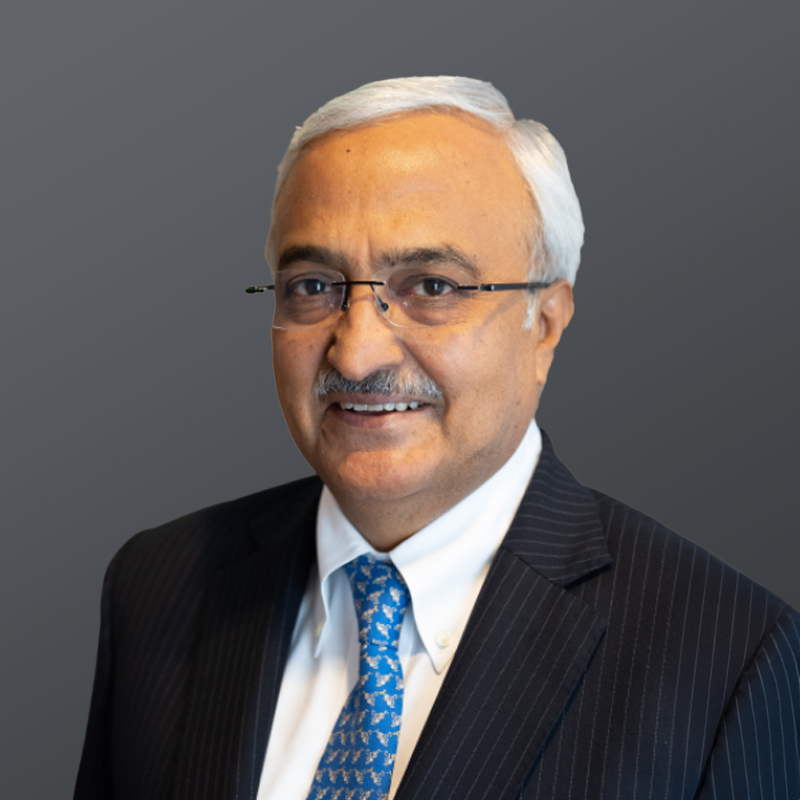
Mahendru
Vice President, IEC
(International Electrotechnical
Commission)

Frabrizio Scrollini
Senior Director of Programs,
Regional LAC Director

Gabriel Borges Vargas
Reality Capture
Project Coordinator
Background
As climate-related disasters grow in frequency and intensity, the gap between innovation and deployment is widening, especially in the most vulnerable countries. While many technologies already exist, effective disaster response depends on rapid deployment and adaptation to local conditions. The WIPO Green Technology Book latest edition shows how a multitude of solutions are available for responding to climate change disasters. Building resilience and adapting to climate change are related challenges, and WIPO GREEN implements targeted onground green technology matchmaking in six counties in Latin America and elsewhere in the world.
In Focus
The session will illustrate how WIPO GREEN, its acceleration projects, and the Green Technology Book series serve as bridges between innovation and implementation that help matchmakers, policymakers, practitioners and the public identify solutions that advance both technology transfer and disaster preparedness, response, and resilience.
The session will also highlight the importance of standardization for effective green technology transfer and local adaptation. Two green technology companies will present their climate disaster solutions.
Register for this sessionFrom Policy to Impact: Advancing Climate Security Across the Arab States
Panel Members

HE Hans Olab Ibrekk
Norway Special Envoy for
Climate, Peace and Security

Dr. Abdullahi Khalif
Country Facilitator, NDC-Partnership/
Senior Strategic Advisor on Climate
Change, Ministry of Environment and
Climate Change, Somalia
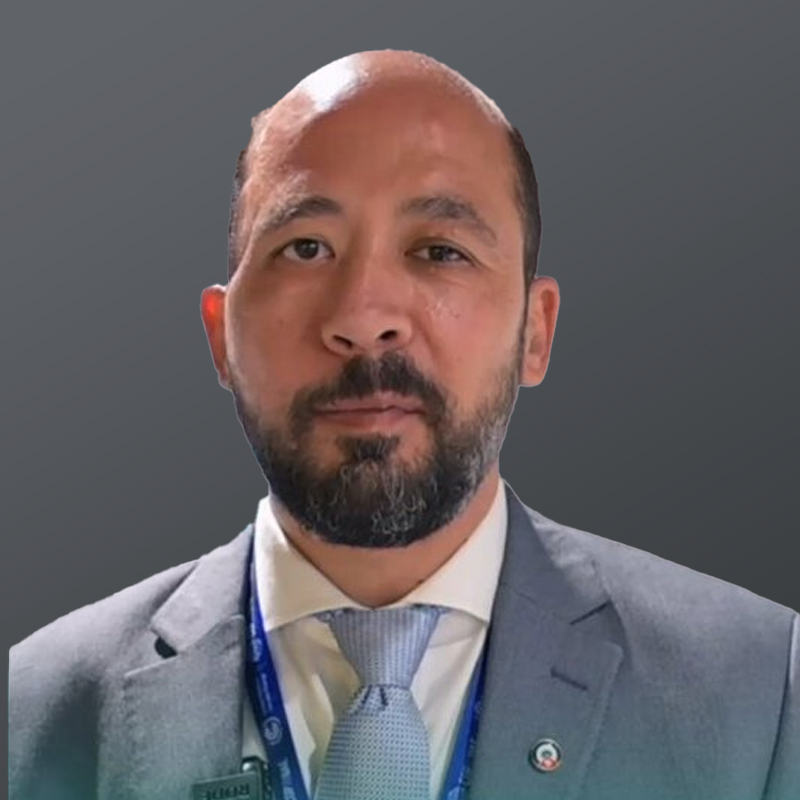
Eng. Belal Shqarin
Director of Climate Change
Directorate at the Ministry
of Environment, Jordan

Yasmine Mostafa
Knowledge Management, Reporting
and Climate Change Officer,
UN-Habitat

Alyssa Gomes
Climate Change Specialist,
Adaptation Fund
Moderator

Thomas Pitaud
Regional Team Leader Climate Change
and Environment Arab States, UNDP
Background
As countries pursue the achievement of their Nationally Determined Contributions (NDCs) and the Sustainable Development Goals (SDGs), those affected by fragility and conflict face a unique set of challenges. The compounding effects of climate change and conflict and crisis disproportionally affect the most vulnerable group, with gender inequality compounding other forms of disadvantage tied to ethnicity, disability, age, and socio-economic status. Data shows the severity of this intersection: among the ten countries ranking lowest on women’s inclusion, justice, and security, eight also rank among the most fragile and climate-vulnerable. In crisis contexts, efforts to rebuild economies. In crisis contexts, efforts to rebuild economies often place additional pressure on already-scarce natural resources, accelerating environmental degradation, deforestation, and greenhouse gas (GHG) emissions, ultimately undermining resilience. The compounding effects of climate change, when combined with social, economic, and political stressors, can further exacerbate fragility, deepen inequalities, and heighten risks to peace and security
The Arab States exemplifies these interlinkages. Already the most water-scarce and foodimport- dependent region in the world, it faces intensifying climatic pressures that have strained access to natural resources and heightened socioeconomic vulnerabilities. Fourteen of the world’s twenty most water-stressed countries are located in the Arab States. Projections indicate that water availability and agricultural productivity could decline by up to 30 percent by 2050 due to climate change, with severe implications for food security, livelihoods, and economic stability.
At the same time, the region’s greenhouse gas emissions increased by 68 percent between 2000 and 2020, twice the global average, while temperatures continue to rise faster than the global mean. Yet, despite escalating climate risks, climate finance flows to the Arab States remain limited, averaging only USD 39.53 per capita compared to a global average of USD 167 for developing countries. Crisis-affected contexts fare even worse, receiving just USD 21.79 per capita overall and USD 2.59 from vertical funds.
Against this backdrop, COP30 presents a critical opportunity to move from policy commitments to concrete action. As countries prepare their third-generation NDCs, integrated solutions that address the intersection of climate, peace, and development are urgently needed. The Arab States’ NDCs already recognize the importance of climate security and the potential for climate action to generate co-benefits across the SDGs, by enhancing governance, reducing gender and socio-economic inequalities, and promoting sustainable livelihoods.
Strengthening resilience and adaptive capacity must therefore lie at the heart of regional development priorities. In response to these interconnected challenges, UNDP has demonstrated how integrated climate solutions can deliver multiple co-benefits across the SDGs through initiatives such as the SDG Climate Facility Project: Climate Action for Human Security, funded. The SDG Climate Facility underscored the role of climate action not only in addressing climate impacts, but also in advancing progress across the SDGs and improving human security in the Arab region. The project also brought together the League of Arab States and UNDP with the Arab Water Council and UN entities including UNDRR, UNEP FI, UN-Habitat, and WFP, to operationalize integrated, cross-sectoral approaches that link climate resilience, sustainable livelihoods, and peacebuilding.
In Focus
The 45-minute side event on the margins of CO30 will serve as a space to share good practices, lesson learned and showcase climate security nexus approaches in Arab States and highlight the way forward. It will provide a space for knowledge sharing among practitioners and decision makers, aimed at exploring and scaling up integrated approaches that can strengthen climate security through tangible results on the ground.
The proposed side event will bring together pioneers of climate security and adaptation to share experiences of inclusive climate-resilient development in action, and address various questions such as “what does climate security look like in practice”? At the same time, the event will seek to galvanize long term support for integrated climate security nexus approaches in areas such as water resource management, food security and resilient agriculture, waste management, and renewable energy, among others.
The objectives of the session are:
- Share lessons learned, success factors and key barriers from field level experiences on the inclusive climate-security nexus approach.
- Present concrete and tangible examples of integrated climate-security nexus pilot projects in Arab States to inform policy-making and large scale- programming.
- Stimulate discussions to identify the potential to scale up and replicate integrated climatesecurity practices in the region and beyond, including through increased access to finance.
Botanical Gardens as Catalysts for Scalable, Plant-Based Solutions for Climate Resilience
Panel Members

Dr. Eric W. Sanderson
Vice President for Urban
Conservation, The New York
Botanical Garden

Dr. Marcela Quintero
Associate Director General for Research
Strategy, and Innovation,
Alliance Bioversity - CIAT
Moderator

Sid Mehta
Founder and CEO, Greenworks
Background
The New York Botanical Garden (NYBG) and Alliance Bioversity-CIAT will host a panel discussion highlighting nature-based and biodiversity-driven pathways for a green transition, emphasizing the role of botanical gardens in advancing climate resilience. The panel will spotlight:
- The Nurturing Nature Initiative: A global effort, led by NYBG in partnership with Botanic Gardens Conservation International (BGCI), to activate a network of botanical gardens as catalysts for ecological restoration and climate action.
- The Global Conservation Consortium for Food Plants (GCCFP): Hosted by NYBG, this initiative supports the conservation of crop wild relatives and underutilized food plants through seed and gene banking, contributing to sustainable agriculture and food security.
- Botanical Gardens as community centers and education hubs: Gardens serve as vital institutions that connect people with plants and nature. They foster environmental education, community resilience, and public engagement in biodiversity conservation.
Botanical gardens represent a largely untapped resource for climate adaptation and mitigation. They play a critical role at the intersection of science, policy, and community engagement. At COP30, NYBG and the Alliance of Bioversity and CIAT will bring together a panel of experts to explore how plant-based approaches can be scaled through the unique capacities of botanical gardens, spanning from in-depth knowledge of plant taxonomy and genetics to their role as key community institutions. This panel will highlight findings from recent global surveys and reports underpinning NYBG’s forthcoming Nurturing Nature Action Plan and foster dialogue on collaborative pathways forward, including those that support food plant conservation through the GCCFP.
In Focus
The panel will:
- Introduce the Nurturing Nature Initiative and its goal to catalyze restoration efforts through a global network of botanical gardens.
- Introduce the GCCFP, a coordinated international effort to conserve food plant diversity through seed banking, living collections, and institutional collaboration.
- Share perspectives from diverse institutions working at the intersection of biodiversity, restoration, and climate resilience.
- Identify challenges, opportunities, and pilot pathways for botanical gardens to enhance plant-based solutions.
- Build momentum for collaborative, cross-institutional efforts.
Circular Energy Solutions: Biogas at the Heart of the Net Zero Transition
Panel Members

Charlotte Morton
Chief Executive,
WBA

Rana Ghoneim
Director, Division of Energy and
Climate Action, UNIDO
Moderator

Rana Adib
Executive Director, REN21
Background
Treating and recycling the 105bn tonnes of organic wastes generated by humans every year, of which 98% remain untreated and emitting methane as they break down, can cut 11% of global GHG emissions.
Unlike any other source of renewable energy, biogas is able to deliver home grown, distributed, baseload, storable and dispatchable green energy. A biogas plant can be as small and micro as a homemade one to power one home to an enormous site which has the capacity to generate heat, power, fuel or energy to benefit millions of people. It is also relatively fast to build a biogas plant compared to other sources of renewable energy, which must be a large consideration for both governments and the private sector in the drive towards net zero.
In Focus
- REN21 to chair and open the event with a keynote on the importance and urgency of accelerating the energy transition
- WBA will present the world first #MakingBiogasHappen (MBH) programme aimed at cutting years from the normal time it takes to develop the necessary policies, regulations and standards needed to support the biogas industry.
- Panellists will explore practical pathways to scale these solutions rapidly and highlight real world case studies from Brazil
- The event will present a joint call for action for governments to implement policies, regulations and standards for the sustainable and rapid roll out of these solutions
Advancing Net Zero: Sustainable Transitions and Green Futures Across the Commonwealth
Panel Members

Shaquille Rawllins
Sustainable Energy Analyst,
Ministry of Energy and Energy
Industries (MEEI) of Trinidad and
Tobago

Archana Joshi
International Solar Alliance

Othniel Yila
National Climate Finance Adviser
for Uganda, Commonwealth
Moderator

Ankita Narain
Research and Policy Officer,
Climate Change, Secretaria
Background
As the global community accelerates towards achieving Net Zero emissions, the Commonwealth remains at the forefront of promoting inclusive, sustainable, and resilient transitions. Across member countries, there is an urgent need to align economic growth with environmental stewardship, ensuring that energy transitions are just, equitable, and climateresilient.
This initiative seeks to highlight innovative pathways to Net Zero through renewable energy expansion, green job creation, sustainable urban and rural planning, and community-driven environmental regeneration. In this context, the reclamation and repurposing of exhausted mines and degraded lands form an integral part of broader climate action – demonstrating how circular resource use and landscape restoration can contribute to carbon neutrality and long-term sustainability.
In Focus
The initiative contributes directly to SDG 7 (Affordable and Clean Energy), SDG 8 (Decent Work and Economic Growth), SDG 11 (Sustainable Cities and Communities), SDG 12 (Responsible Consumption and Production), and SDG 13 (Climate Action) – reinforcing the Commonwealth’s commitment to sustainable prosperity, innovation, and resilience.
This event reaffirms the Commonwealth’s collective commitment to achieving Net Zero through inclusive, sustainable, and climate-smart pathways. By linking clean energy transitions with land reclamation, green employment, and community empowerment, it aims to inspire cross-sector collaboration and shared responsibility for a sustainable future for all.
This event will:
- Showcase Commonwealth youth-led innovations advancing Net Zero transitions across clean energy, sustainable industry, and green livelihoods.
- Explore the integration of renewable energy systems – including solar, wind, and pumped hydro storage – into national decarbonisation strategies.
- Promote green job creation and capacity-building initiatives to support youth and local communities in the shift towards sustainable economies.
- Demonstrate how land reclamation and circular resource management can complement national Net Zero and biodiversity goals.
- Facilitate knowledge exchange on policy frameworks, financing mechanisms, and technology adoption for a just and inclusive transition.
- Align outcomes with the United Nations Sustainable Development Goals (SDGs) and the Commonwealth’s priorities on environmental resilience.
Questions for Panel Discussion
- How are youth-led initiatives across the Commonwealth driving innovation in renewable energy and sustainable development?
- How are youth-led initiatives across the Commonwealth driving innovation in renewable energy and sustainable development?
- In what ways can young people contribute to land reclamation and circular resource use as part of national Net Zero strategies?
- How can green job creation be aligned with youth skills development and entrepreneurship in emerging sectors?
- What role can youth networks and cross-country collaboration play in accelerating inclusive climate action?
Slovenia Deep Demonstration: Coalition Between Government, Industry, and Other Stakeholders to Address a Key Economic Vulnerability in Critical Raw Materials with Circular Economy
Panel Members

Alberto Ogura
Industry Decarbonisation Lead
Climate-KIC

Uroš Vajgl
Slovenian State Secretary
for Environment and Climate

Izabella Teixeira
Co-Chair, UN International
Resource Panel

Sandrine Dixson-Declève
Honourary President,
Club of Rome

Dr. Kirsten Dunlop
CEO, Climate-KIC
Background
The deep demonstration in Slovenia is grounded in the global urgency to shift from linear economic models toward circular ones that reduce emissions and resource use. The Slovenian government, acknowledging this urgency, plays a critical role by providing strong policy leadership and regulatory frameworks that align with European and global climate goals. Their perspective emphasizes the importance of creating enabling environments where innovation can flourish, and diverse stakeholders such as industries, academia, starups, and citizens can collaborate with public institutions to meet ambitious targets and improve the country’s economy.
In Focus
This session will focus on the nascent importance of government and industry sinergies to tackle innovation opportunities. Slovenia’s Deep Demonstration aligns with circular economy principles that aim to reduce dependence on virgin resource extraction by prioritizing recycling, resource recovery, and sustainable material innovation at the same time that it can address emerging market demands for critical raw materials.
Questions for Panel Discussion
1. What is the Slovenia Deep Demonstration?
- What were the key value chains and sectors that the demonstration targets for transformation in Slovenia?
- How does the Slovenia Deep Demonstration approach systemic innovation differently than traditional projects?
2. Delving into the Circular Critical Raw Materials (CRM) value chain:
- Why focus in CRM?
- What was the importance of bringing a wide stakeholders group (E.g.: Industry, academia) in this process?
- What are the main strategic priorities when addressing CRM circularity at a systemic, national level?
3. Government and Industry partnership
- How is the government collaborating with industry and other stakeholders to coordinate this ambitious transition?
- How can such a partnership be improved?
- Can such a partnership be extended and scaled to other countries and regions of the world?
© 2025 WGEO- World Green Economy Organization. All Rights Reserved.