 info@worldgreeneconomy.org




WGEO at COP30
 10th-21st November 2025
  Belém, Brazil
Monday, 10 November 2025
Resilient Cities and Green Infrastructure for a Circular Future
Implementation partnerships for just Transitions: Accelerating Climate Action Trough Whole of Economy and Whole of Society Approaches

Background
Delivering just transitions at speed and scale requires moving beyond planning and commitments towards implementation partnerships that connect the Whole-of-Economy (WoE) and Whole-of-Society (Wos).
This session will highlight how such partnerships can turn just transition goals into tangible, inclusive, and climate-aligned outcomes. Building on experiences from the Global South, it will showcase practical examples of cooperation and innovation that operationalise fairness, inclusion, and delivery in transition planning and implementation
In Focus
- The discussion will explore how WoE and WoS approaches can help countries and regions
- Bridge the gap between planning and delivery of just transitions
- Align policy, finance, and institutional levers for practical implementation
- The panel will be interactive and forward-looking, focusing on partnership implementation as a lever for accelerating the green transition while maintaining equity and shared prosperity.
Questions for Panel Discussion
- Lauren Hermanus will open the discussion with framing remarks, introducing whole-of-economy and whole-of-society approaches for just transitions, explaining how these can connect high-level just transition strategies to real implementation outcomes.
-
This will be followed by a panel discussion, in which panelists will respond to questions:
- From your perspective, what elements of global and regional governance – such as fiscal, trade, or industrial policies – are most critical to ensuring that just transitions also strengthen economic resilience and South–South cooperation?
- How can regional initiatives and industrial strategies in Latin America – for example, Brazil’s experience – build stronger implementation partnerships that advance both climate and development goals?
- From the perspective of Least Developed Countries, what kinds of partnerships or capacity-building mechanisms are proving most effective in enabling fair and inclusive implementation of just transitions?
Panel Members

Lauren Hermanus
Co-founding Director,
Southern Transitions

Maiara Folly
Executive Direcotor and Co-Founder,
Plataforma CIPO

Noor Saghir
Researcher, International
Institute for Environment and
Development (IIED)

Manav Khanna
Programme Manager
Just Transitions
Southern Transitions

Marta Torres Cunfaus
Director Climate Programme
IDDRI
Moderator

Armando Ayala
Head of Just Transition Finance,
Southern Transtions
Greening Construction: Bio Based Materials and Modular Building
Background
The construction sector is one of the largest contributors to global greenhouse gas emissions, responsible for over one-third of energy-related CO2 emissions worldwide. Conventional building practices, heavily reliant on cement, steel, and other carbon-intensive materials, pose significant barriers to achieving the Paris Agreement objectives. With rapid urbanization continuing, especially in developing regions, demand for housing and infrastructure will rise sharply in the coming decades underscoring the urgency to shift toward low-carbon, resource-efficient, and circular construction models.
Bio-based materials such as bamboo, timber, hempcrete, and agricultural residues, alongside modular and prefabricated building systems, offer scalable pathways to decarbonize the built environment. These innovations reduce lifecycle emissions, improve energy efficiency, and enable reuse of components, while often creating local economic opportunities. WGEO, through the Global Alliance on Green Economy (GAGE), supports knowledge-sharing and policy alignment to accelerate the global transition to sustainable construction practices as part of climate action and the green economy.
In Focus
This session will explore how cities, governments, and the private sector can drive a construction revolution through bio-based and modular building systems. It will highlight cutting-edge materials and technologies, policy incentives for adoption, and opportunities for financing and upscaling. The dialogue will also address the importance of aligning standards and certification processes to ensure safety, durability, and market acceptance, while promoting circularity and affordability in the housing and infrastructure sectors.
Questions for Panel Discussion
-
What are the most promising innovations in bio-based and modular construction for climate action?
- How do bio-based materials compare in terms of carbon footprint, durability, and cost to conventional building materials?
- What advances in modular building systems can accelerate deployment in urban housing and infrastructure?
- How can local supply chains of bio-based materials contribute to economic diversification and job creation?
-
How can policy and regulatory frameworks enable a large-scale transition to low-carbon construction?
- What building codes, certification standards, and procurement policies are needed to mainstream bio-based and modular approaches?
- How can governments incentivize developers and contractors to adopt sustainable building practices?
- What role can international standards and cross-border collaboration play in accelerating uptake?
-
What financing and market mechanisms can drive adoption of sustainable construction models?
- How can green bonds and climate finance be tailored to support innovative construction projects?
- What strategies can de-risk investment in novel bio-based materials and prefabrication systems?
- How can public-private partnerships catalyze market demand for climate-smart building solutions?
Panel Members

Ryan Colke
Executive Director, Energy,
Resiliences & Innovation,
International Code Council

Stephane Pouffary
CEO, ENERGIES 2050
Moderator

Hani Tohme
Partner, MEA Sustainability Lead,
Kearney
Powering Progress: Scaling Sustainable Energy Solutions for 2030
Background
As an outcome of COP 28 and the first Global Stocktake, the 2030 energy transition goals aim to accelerate global progress toward a cleaner and more affordable energy future. They include targets such as: doubling the rate of energy efficiency improvements,tripling renewable energy capacity, and scaling up energy storage, among others. Together, these targets are designed to cut emissions, strengthen energy security, and drive sustainable economic growth worldwide.
In Focus
Join industry executives and coalition leaders as they share how cutting edge technologies, smart partnerships, and workforce strategies are accelerating clean energy deployment, boosting efficiency, and keeping energy affordable. Get insights on the policy frameworks and business capacity needed to achieve the 2030 energy transition goals.
Questions for Panel Discussion
- Let’s talk about the 2030 energy transition goals. How are you seeing these goals turning
into action around the world?- What technologies have been proving most scalable?
- Where do you see the biggest bottlenecks?
- How can industry and government collaborate to ensure that the energy transition remains affordable and equitable while maintaining reliability and security?
- How can workforce development and training keep pace with the rapid expansion of clean
energy deployment?
Panel Members

Mario Giordan
Chair, European Alliance Energy
and Head of Global Public and
Government Affairs, Signify
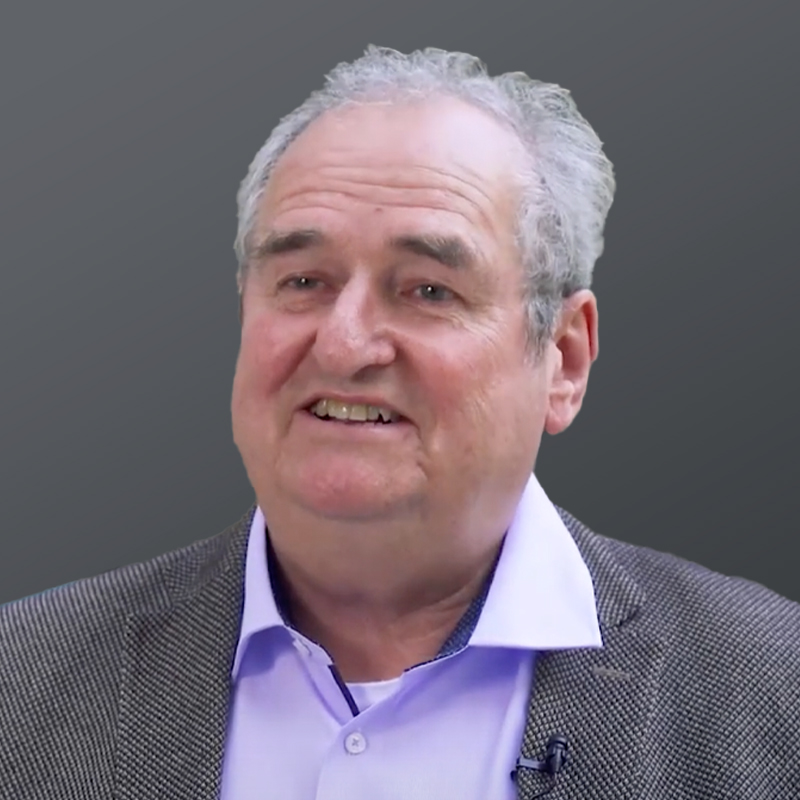
Kolja Kuse
Chief Executive Officer, E5

Carlos Garcia
Head of Methane Markets,
STX Group
Moderator

Laura Tierne
Vice President, International Programs,
Business Council for Sustainable Energy
When Adaptation Leads to Human Disaster: A Lesson Learned from Afghanistan
Panel Members

Hayat Wahdat
Chairperson of the Board,
Organization for Relief
Development (ORD)
Naem Salimee
Technical Expert on Karez Systems and,
Sharq University of Afganistan
Chancellor
© 2025 WGEO- World Green Economy Organization. All Rights Reserved.