 info@worldgreeneconomy.org




WGEO at COP30
 10th-21st November 2025
  Belém, Brazil
Wednesday, 19 November 2025
Sustainable Food, Water Security & Gender-Responsive Climate Action
Securing Water for a Changing Climate: Innovations in Climate-Resilient Water Systems

Panel Members

Bronson Eranogwa
Executive Director, The Source Plus

Marcos Antonio de Oliveira Junior
Research Impact Fellow, University of Exeter
Moderator

Stella Muthungu
Technical Advisor, Building Climate
Resilience with Urban Poor (BCRUP),
Ministry of Lands, Public Works,
Housing and Urban Development,
Kenya
Background
Water security is emerging as one of the most critical challenges of the climate crisis. Shifts in precipitation patterns, intensifying droughts and floods, and salinization of groundwater are increasingly destabilizing water systems worldwide. These stresses directly threaten agricultural production, public health, and urban development, especially in climatevulnerable regions of the Global South. Traditional water infrastructure – often centralized, resource-intensive, and designed for historical climate conditions – struggles to meet current and future demands. Unless addressed urgently, water insecurity risks becoming a systemic barrier to sustainable development and a driver of conflict, migration, and economic instability.
At the same time, transformative innovations are offering viable solutions to strengthen water resilience. Decentralized treatment systems, rainwater harvesting, aquifer recharge technologies, and circular water reuse are increasingly accessible, cost-effective, and environmentally sustainable. When embedded within holistic water governance frameworks, such innovations can diversify supply sources, safeguard ecosystems, and reduce reliance on overstressed freshwater reserves. International collaboration is essential to scale these solutions and ensure they are equitably deployed in communities most at risk. WGEO, through GAGE, supports enabling conditions for investment and policy innovation in climate-resilient water systems, positioning water security as a cornerstone of green economy pathways.
Water security requires integrated governance that aligns urban planning, agriculture, energy, and ecosystem management. Community engagement and Indigenous knowledge are essential for building legitimacy and ensuring that solutions are context-specific and sustainable.
In Focus
This session will explore how integrated governance and systemic planning can deliver water resilience at national and regional scales. Panelists will discuss the latest technical solutions in decentralized purification, circular reuse, and smart water monitoring, while examining policies that incentivize their mainstream adoption. Discussions will highlight how policies, crosssectoral coordination, and inclusive decision-making can mainstream water resilience across NDCs, adaptation plans, and development strategies. The dialogue will also highlight crosssector synergies between agriculture, urban planning, and ecosystem management, emphasizing how water innovations can simultaneously address food security, disaster risk reduction, and biodiversity protection. Special attention will be given to financing mechanisms and South-South knowledge sharing that can accelerate uptake in water-stressed developing countries.
Questions for Panel Discussion
1. What innovations in water systems most effectively strengthen resilience to climate shocks?
- How can decentralized treatment complement or replace centralized infrastructure?
- What role can smart monitoring and digital tools play in optimizing water use?
- How can aquifer recharge, reuse, and harvesting models be scaled in vulnerable regions?
2. What policy and governance frameworks are needed to mainstream climate-resilient water solutions?
- How can national adaptation plans and NDCs integrate water security as a priority?
- What role can urban planning, building codes, and agricultural policy play in scaling water innovations?
- How can local communities and Indigenous knowledge systems be engaged as equal partners in water governance?
3. What financing and partnerships can accelerate global water security solutions?
- How can blended finance, concessional loans, and green bonds support water infrastructure?
- What role do public–private partnerships play in scaling resilient water systems?
- How can South-South cooperation and regional platforms enhance knowledge transfer and investment mobilization?
From Waste to Wheels and Watts: Subnational Innovation in Recycling, E-Mobility & Solar
Panel Members

Professor Chinwe Obuaku-Igwe
Director-General & Special Envoy
of the Governor of Osun State on
Climate Change and Renewable
Energy

Samuel Ogunleye
Director of Climate Change &
Renewable Energy, Osun State Ministry
of Environment and Sanitation

Dr. Asmau Jibril
Assistant Director & Head, Mitigation
Division, Department of Climate
Change, Federal Ministry of
Environment

Princess Doosugh Agbadu
Executive Director, Esteemed Hub
Foundation
Moderator

Olumide Idowu
Executive Director,
ICCDI Africa
Building Gender-Responsive Food Supply Chains for Climate Resilience
Panel Members

Bronson Eranogwa
Executive Director, The Source Plus

Jeannette Gurung
Founder/Executive Director, WOCAN

Ermance Roussotte
Sustainability Advocacy & Policy Senior Manager, Global Public Affairs team, Danone
Moderator

Yvette Ahenkorah
Urban and Infrastructure Lead, Alliance for Empowering Communities
Background
Food systems are among the most climate-sensitive sectors, with supply chains increasingly exposed to risks from droughts, floods, and extreme weather events. Building resilience in food supply chains is critical not only for ensuring stable access to food but also for reducing greenhouse gas emissions and promoting sustainable resource use. Yet, despite their central role in agricultural production, trade, and distribution, women often face barriers to meaningful participation in food supply chains, including limited access to finance, land, technology, and markets.
Gender-responsive approaches to food supply chains are essential to achieving resilience. Empowering women as farmers, entrepreneurs, and leaders helps unlock innovation and strengthen adaptive capacity at every stage of the food system. By recognizing women’s role in climate-smart practices, integrating gender equality into policy frameworks, and fostering inclusive value chains, countries can better align climate action with sustainable development goals. WGEO is committed to advancing such approaches through capacity building, partnerships, and advocacy within the green economy framework.
In Focus
This session will explore practical strategies to integrate gender-responsive approaches into food supply chains as part of climate resilience efforts. It will focus on how policies, business models, and technologies can enhance women’s roles in production, processing, distribution, and retail. The discussion will also examine how public and private actors can address structural inequalities, ensure equal access to resources, and foster inclusive partnerships across local, national, and international food systems. The session aims to identify scalable solutions that enable women to contribute to and benefit from climate-resilient food supply chains.
Questions for Panel Discussion
1. How can food supply chains be redesigned to become more gender-responsive and climate-resilient?
- What role can women play in strengthening supply chain resilience from production to retail?
- How can gender-sensitive policies support inclusive participation in agricultural trade and logistics?
- What lessons can be drawn from successful case studies of women-led climate-smart supply chains?
2. What barriers limit women’s participation in climate-resilient food supply chains, and how can these be addressed?
- How do access gaps in land, credit, and technology disproportionately affect women’s roles in supply chains?
- What regulatory or institutional reforms are most effective in closing gender gaps in food systems?
- How can partnerships with cooperatives, NGOs, and the private sector expand women’s opportunities in food value chains?
3. What innovations and partnerships can accelerate gender-responsive food system transformation?
- How can digital tools, data platforms, and financial instruments empower women across supply chains?
- What role can multilateral initiatives and public-private partnerships play in scaling gender-responsive models?
- How can global trade, investment frameworks, and climate finance mechanisms integrate stronger gender considerations?
Women’s Economic Empowerment in Green Value Chains – Access to Finance and Markets
Panel Members

Dr Nancy Omolo
Gender Climate Finance Adviser,
The Commonwealth Secretariat

Anila Noor
Managing Director, New Women Connectors

Dr. Chantal Line Carpentier
Head of the Trade, Environment,
Climate Change and Sustainable
Development Branch within the
Division on International Trade and
Commodities

Bruna Rezende
Founder and CEO , IRIS
Moderator

Kalyani Inampudi
Independent ESG and Carbon
Consultant, London
Background
The transformation toward low-carbon and climate-resilient economies requires inclusive participation across value chains. Women, who make up a significant share of agricultural producers, small-scale entrepreneurs, and workers in emerging green industries, often face systemic barriers to accessing finance, technology, and markets. These constraints reduce their ability to scale sustainable businesses, integrate into global supply chains, and benefit from climate-smart opportunities. Closing these gaps is not only a matter of equity but also a prerequisite for accelerating sustainable development and achieving the Paris Agreement objectives.
Recent studies by the World Bank and UN Women show that advancing women’s economic empowerment in climate-related value chains can boost productivity, innovation, and resilience while contributing to poverty reduction and social equity. However, structural barriers such as lack of collateral, limited financial literacy, gender-blind investment criteria, and exclusion from decision-making processes remain prevalent. Addressing these challenges requires targeted financial mechanisms, inclusive market strategies, and enabling policies that mainstream gender in green economy planning.
In Focus
This session will highlight how women’s economic empowerment can be strengthened through improved access to finance, markets, and business ecosystems within climate-resilient value chains. It will explore innovative financing models tailored to women entrepreneurs, strategies for integrating women into green global supply chains, and the role of inclusive trade and procurement policies. The panel will also examine how multilateral development banks, governments, and the private sector can collaborate to provide equitable opportunities for women in emerging green sectors.
Questions for Panel Discussion
1. What strategies can expand women’s access to finance for green enterprises?
- How can microfinance, blended finance, and impact investment models be adapted to meet the needs of women-led businesses?
- What role can credit guarantees, collateral substitutes, and digital finance play in closing the gender-finance gap?
- How can multilateral climate funds and development banks ensure that women are prioritized in green financing allocations?
2. How can women’s participation in green value chains be strengthened through market access?
- What trade, procurement, and certification policies can help integrate women-led enterprises into regional and global green markets?
- How can cooperatives, producer organizations, and women’s networks expand opportunities for scaling sustainable businesses?
- What role can corporate buyers and private sector partners play in creating inclusive supply chains?
3. What policy and partnership frameworks are needed to accelerate women’s empowerment in green value chains?
Register for this sessionBuilding Gender-Just Green Jobs for a Just Transition
Panel Members

Davinah Milenge Uwella
Chief Programme Coordinator at
African Develeopment Bank Group
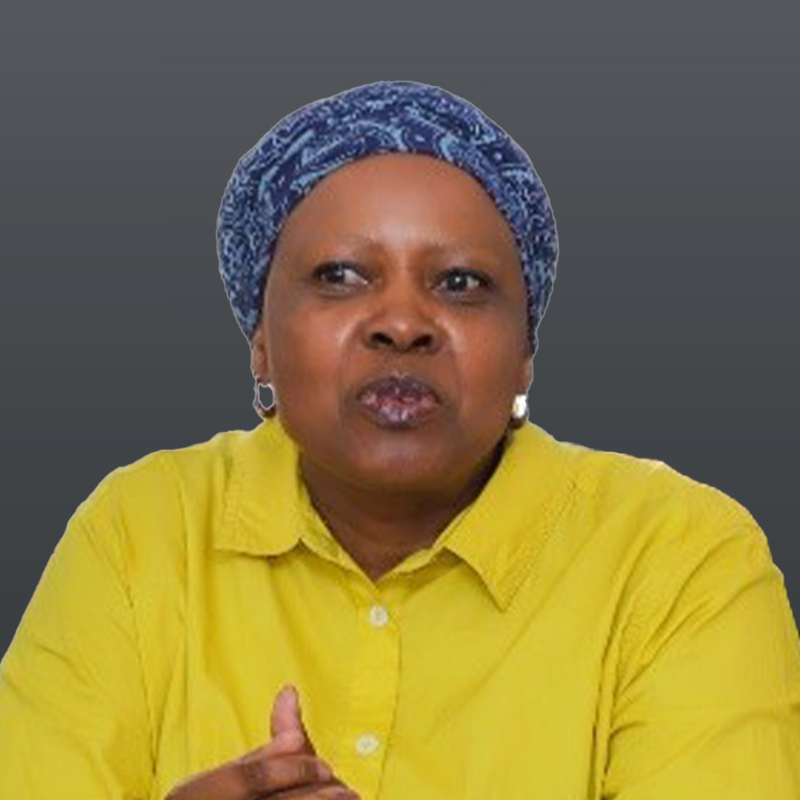
Ndivile Mokoena
co-Director for GenderCC SA -
Woman for Climate Justice

Kuda Manjonjo
Just Transition Advisor and Lead on
Transition Minerals and Green
Industrialization at Power Shift Africa

Chaona Sinalo Kumbani
Principal Economist Ministry
of Malawi
Background
As the world transitions toward low-carbon economies, millions of new “green jobs” will be created – yet without gender equality at the heart of this transition, existing inequalities risk deepening. Today, women remain underrepresented in energy, infrastructure, and other green sectors, while climate shocks continue to erode their livelihoods, increase unpaid care burdens, and push girls out of education. The World Economic Forum warns that gender parity in the workforce has reached its lowest level on record, underscoring the urgent need for systemic change.
The green transition offers breakthrough potential; it could generate up to 65 million new jobs and $26 trillion in growth by 2030, but only if designed to include and empower women. Investing in care and low-carbon sectors is key to achieving this vision – unpaid care work alone adds $10.8 trillion to the global economy each year. COP30 provides a critical opportunity to spotlight the intersection of gender equality, climate action, and economic justice, and to ensure the just transition truly becomes just for all.
In Focus
This event will explore how governments, private-sector actors, and civil society can work together to create equitable, gender-just green jobs that drive both climate and social progress. It will examine how to integrate a gender lens into green transition policies, investments, and workforce planning – from clean energy and green entrepreneurship to care economies and social protection. Drawing on CARE’s global experience, the discussion will showcase concrete programmatic examples such as the Solar Harnessed Entrepreneurs (SHE) initiative in Sierra Leone, which enables women to lead renewable energy enterprises, and work from Vietnam highlighting how recognising and investing in care work can expand the very definition of “green work.”
The conversation will also explore how the private sector can complement public efforts through gender-responsive value chains, re- and upskilling initiatives, and inclusive leadership. By connecting global policy frameworks with local realities, the event aims to inspire scalable models of women-led, community-rooted green transitions that advance both climate justice and women’s economic rights.
Questions for Panel Discussion
- How can governments and development partners ensure that green transitions create equitable and decent work opportunities for women, especially in traditionally maledominated sectors?
- What policy and financing mechanisms are needed to value and invest in care work as a core part of low-carbon, inclusive economies?
- How can the private sector and financial institutions actively contribute to gender-just green value chains and invest in women’s skills and leadership?
- What practical lessons can be drawn from CARE’s and partners’ experiences in fostering women-led green entrepreneurship at community level?
- How can COP30 advance global commitments to make the just transition genuinely gender-just – balancing environmental ambition with social equity?
Youth Voices for Food Security & Human Rights: Launch of the Global Survey Outcomes for the Ohchr 2026 Thematic Report
Panel Members

Anya Saltmarsh
YOUNGO Food &
Agriculture WG

Christopher Bateman
IAAS

Stephan Sampio

Elisa Morgera
UN Special Rappoteur
Moderator

Vikrant Srivastava
Global Flagship Initiative

Gender-Responsive Climate Finance: Designing Inclusive Investment Mechanisms
Panel Members

Dr. Jeannette Gurung
Founder, WOCAN and the W+ Standard

Bruna Rezende
CEO, IRIADA

Dr. Shubhi Goyal
Climate Finance Researcher/Associate, Massachusetts Institute of Technology (MIT)/Huairou Commission

Dr. Ana Maria Loboguerrero
Director, Adaptive and Equitable Food Systems, Gates Foundation
Background
Women’s empowerment is not just a social good – it’s a measurable driver of climate impact and financial returns.
This session explores how outcomes-based finance is creating a new class of investable opportunities that deliver measurable benefits for women, communities, and the planet.
In Focus
Speakers will discuss how innovations such as the W+ Standard enable the creation and trading of verified social assets that measure women’s empowerment. Through the example of IRIADA’s application of the W+ Standard, they will show how businesses and investors can finance, certify, and trade measurable improvements in women’s well-being.
The session will highlight practical models for outcome-based finance that reward real progress in women’s inclusion – not just compliance – and demonstrate how catalytic capital from both public and private sectors can be deployed through tradable social credits and blended finance structures. Participants will gain actionable insights on how investors, corporations, and carbon buyers can capture the “gender dividend” to scale transformative climate action.
Register for this session© 2025 WGEO- World Green Economy Organization. All Rights Reserved.