 info@worldgreeneconomy.org




WGEO at COP30
 10th-21st November 2025
  Belém, Brazil
Friday, 14 November 2025
Decarbonizing Energy, Industry & Transport through Green Economy Pathways
Trade and Climate at the Crossroads: Industrial Policy for a Warming World

Panel Members

Rodrigo Lima
Managing Partner, Agroicone

Trudy Hartzenberg
Executive Director, TRALAC

Via Azlia Widiyadi
Research Associate, Centre for Strategic and International Studies (CSIS) Indonesia

Charra Tesfaye Terfassa
Program Manager, Economic and Climate Prosperity, Open Society Foundations
Moderator

Leva Baršauskaitė
Lead, Trade and Green Transition, International Institute for Sustainable Development
Background
This year’s COP30 theme – green trade for catalysing industrial decarbonisation – comes as countries roll out ambitious green industrial policies to meet climate goals, manage geopolitical risks, and secure energy needs. Successful policies can cut costs and spread green technologies globally, but poorly coordinated ones risk subsidy races, trade frictions, and rising inequalities for developing countries and LDCs. Recent unilateral actions and diluted climate commitments highlight the danger of fragmentation, making international cooperation vital. Stronger alignment is needed to ensure industrial policy supports global decarbonisation rather than undermining it.
In Focus
This high-level panel of experts will debate how industrial policies and trade rules can speed up decarbonization, support fair transitions, and generate actionable insights for COP30 and beyond.
Questions for Panel Discussion
- Policy design: How can green industrial policy be designed to maximize its positive climate and economic impacts and mitigate the risk of policy capture, inefficiency, and inequity?
- Global spillovers: When do green industrial policies generate positive spillovers for trading partners and the global economy? When do they create negative spillovers or distortions?
- Relevance of international rules and multilateralism: Are existing trade rules adequate to accelerate the pursuit of green industrial policies? Where are the reforms most urgently needed to ensure policy fairness and effectiveness?
Industrial Decarbonization Roadmaps: Heavy Industry Transformation Strategies
Panel Members

Glauco Freitas
Country Managing Director, Brazil, Hitachi Energy

Phil Cole
Director of Industrial Affairs at WindEurope

Stephane Pouffary
CEO, ENERGIES 2050

Bineesha Payattati
Advisor, MRAI (Material Recycling Association of India)
Moderator

Björn Knoop
Head of Private Partnerships, CEMUNE
Background
Heavy industry – including steel, cement, aluminum, and chemicals – accounts for nearly onethird of global greenhouse gas emissions, making it one of the most critical yet challenging sectors to decarbonize. These “hard-to-abate” industries are essential to modern economies but are deeply reliant on fossil fuels for both energy and feedstock. Without effective strategies for industrial decarbonization, achieving global Net Zero targets by mid-century will remain out of reach. The International Energy Agency (IEA) and the UNFCCC have both stressed that industrial transformation must accelerate significantly within this decade to align with the Paris Agreement.
Efforts to decarbonize heavy industry are gaining momentum through technological innovation, regulatory frameworks, and collaborative initiatives such as industrial clusters and green public procurement. However, scaling solutions across geographies – especially in developing economies where industrial demand is growing rapidly – remains a formidable challenge. The World Green Economy Organization (WGEO) supports its members in developing practical, sector-specific decarbonization roadmaps that combine technological pathways, investment models, and enabling policies to ensure industries remain competitive while reducing their climate footprint.
In Focus
This session will examine the strategic roadmaps guiding heavy industry transformation, highlighting both global and regional approaches. Panelists will explore:
- Technology pathways such as electrification, hydrogen-based production, carbon capture and utilization, and circular production processes.
- Policy frameworks that incentivize industrial innovation, carbon pricing, and demand-side measures such as green procurement and product labeling.
- Financing mechanisms and public-private partnerships that can mobilize the significant capital needed for industrial retrofits and new green facilities.
The dialogue will emphasize how tailored strategies can ensure decarbonization roadmaps are not only technically feasible but also socially inclusive and economically viable across both developed and emerging economies.
Questions for Panel Discussion
1. What are the most effective technology pathways for decarbonizing heavy industry?
- How do options such as hydrogen, electrification, and CCUS compare in terms of readiness, scalability, and cost?
- What role can industrial clusters and shared infrastructure play in reducing transition costs?
- How can circular economy practices – such as recycling and material efficiency – reduce emissions in heavy industry?
2. What policy frameworks and regulatory tools can drive industrial decarbonization?
- How can governments design carbon pricing and emissions trading systems that stimulate innovation while safeguarding competitiveness?
- What procurement policies and product standards can create markets for low-carbon industrial products?
- How can regulatory certainty and long-term strategies encourage private-sector investment in industrial transformation?
3. How can financing and partnerships accelerate the implementation of industrial decarbonization roadmaps?
- What innovative financing models can mobilize the trillions needed for industrial retrofits and new low-carbon plants?
- How can public-private partnerships de-risk investments in emerging markets and foster technology deployment?
- What role should international cooperation play in ensuring equitable access to technologies and capacity building for industrial decarbonization?
Carbon Capture and Utilization: Industrial Applications and the Circular Carbon Economy
Panel Members

Pavan Chilukuri
Managing Director – Middle East, Energex Partners

Johan Neethling
CEO, Tree Associates

Breanne O’Reilly
COO, International CCS Knowledge Centre
Moderator

Olivia Powis
CEO, Carbon Capture and Storage Association (CCSA)
Background
Carbon Capture, Utilization and Storage (CCUS) is a crucial technology solution that will be essential to meet global climate goals. It has the potential to deliver deep emissions reductions across sectors such as iron, steel, cement, electricity and hydrogen. It can also open up markets for utilization (CCU) and deliver carbon dioxide removal through technologies such as Bioenergy with CCS (BECCS), Direct Air Capture and Storage (DACCS) and Waste to Energy with CCS (WECCS). The broad applications for CCUS will enhance resilience, create and retain critical jobs and deliver significant economic benefits for countries all over the world, helping to ensure we remain on the path to delivering the goals of the Paris Agreement.
In Focus
This event will reflect on the positive developments in the CCUS industry over the past 18 months, with a number of projects reaching financial close in Europe and around the world. Speakers will debate how this positive momentum can be maintained, and the key next steps and actions that will be needed to deliver the next wave of CCUS projects.
The session will then focus on the development of emerging markets that will be key for CCUS: such as Emissions Trading Systems, low-carbon products market, a global market for Carbon Dioxide Removals (CDR) and cross-border CO2 markets. Coordination and collaboration will be critical to ensure these markets can deliver a successful CCUS industry and help to unlock a global green economy.
Trade’s Contribution in Advancing the Global Climate Agenda: Examples for Collective Action
Panel Members

Rachel Kyte
CMG, UK Special Envoy on Climate 2024, United Kingdom

H.E. Will Nankervis
Australia’s Ambassador for Climate Change

Selwin Hart
Special Adviser to the UN Secretary-General on Climate Action and Just Transition

H.E. Elizabeth Thompson
Ambassador Extraordinary and Plenipotentiary of Barbados for Climate Change, SIDS, and the Law of the Sea, Sherpa to the Climate Vulnerable Forum Vulnerable Twenty Group (CVF-V20), Institute for Climate and Society, Brazil
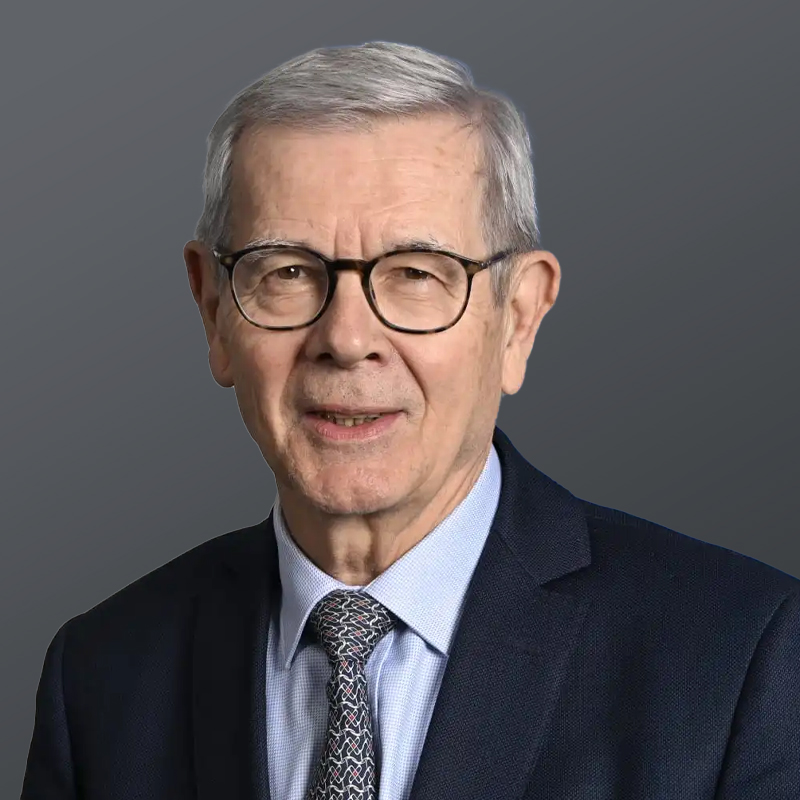
Philippe Varin
Chair, International Chamber of Commerce

Theo Mitchell
Director, Climate - Europe and International, Children’s Investment Fund Foundation

Arunabha Ghosh
Special Envoy of the COP30 Presidency for South Asia, Founder & CEO, Council on Energy, Environment and Water

Ellie Belton
Senior Policy Advisor - Trade and Climate, E3G,

Luz Maria de la Mora
Director, UNCTAD's Division on International Trade and Commodities

Teh Lian Tai
Head of Secretariat, FACT
Moderator

Christophe Bellmann
Secretariat, Coalition of Trade Ministers on Climate
Background
The Coalition of Trade Ministers on Climate will host a panel on “Trade’s contribution in advancing the Global Climate Agenda: Examples for Collective Action” that addresses trade’s role in climate change mitigation and adaptation, and climate-resilient sustainable development. In accordance with one of the Coalition’s core objectives, outlined in its Launch Statement – to build alliances and partnerships with relevant stakeholders, the panel aims to convene a diverse group of trade and climate experts to engage in dialogue with Coalition representatives to foster collaboration.
Launched in 2023, the Coalition of Trade Ministers on Climate brings together 63 Ministers of a diversity of countries from different regions at different levels of development, climate vulnerabilities, and trade circumstances.
In Focus
The session will provide an opportunity for participants to share experiences and perspectives on concrete and effective trade-related actions that have the potential to accelerate climateresilient and sustainable development on the ground. At the panel, the Coalition will share examples of trade-related collaborative actions by Coalition Members that advance the global climate agenda.
Questions for Panel Discussion
- After years of emphasizing trade-related cooperation to respond to the climate crisis, where is progress being made, and what approaches are proving effective?
- What are some concrete examples of positive trade-related actions that can help accelerate climate action and climate-resilient sustainable development on the ground?
- Considering the complex political landscape, what are the key priorities and concrete opportunities for cooperation and collective action on trade, climate and sustainable development? What role can Trade Ministers play in advancing these efforts and where and how can collaboration with the climate community be strengthened?
Scaling Sustainable Aviation Fuels and Aligning with CORSIA
Panel Members

Matthias Berninger
Head of Public Affairs, Sustainability and Safety, Bayer AG

Pedro de la Fuente
Senior Manager, Sustainability, Sustainability & Economics - Policy and Standards, IATA

Ms. Jane Hupe
Envoy of the ICAO Secretary General to the UNFCCC, International Civil Aviation Organization (ICAO)
Moderator

Mark Essle
Partner, Kearney
Background
Aviation remains one of the most challenging sectors to decarbonize due to its reliance on high energy-dense fuels and the global nature of air travel. Sustainable Aviation Fuels (SAFs) are currently the most viable pathway for reducing aviation emissions in the medium term, capable of cutting lifecycle greenhouse gas emissions by up to 80% compared to conventional jet fuel. However, SAF production today accounts for less than 0.1% of global jet fuel demand, with costs remaining two to five times higher than fossil-based fuels. Expanding production and uptake will require coordinated policy support, major investment in feedstocks and technologies, and strong international alignment.
The Carbon Offsetting and Reduction Scheme for International Aviation (CORSIA), established by the International Civil Aviation Organization (ICAO), provides a global framework for addressing aviation emissions through offsets and alternative fuels. Aligning SAF development with CORSIA not only ensures environmental integrity but also creates market incentives for airlines and investors. By combining technological innovation, supportive policies, and international cooperation, SAFs can play a critical role in steering the aviation sector toward Net Zero while safeguarding connectivity and economic growth.
In Focus
This session will focus on accelerating the scale-up of SAFs and aligning industry action with CORSIA. It will explore:
- Technology and feedstocks: Developing advanced biofuels and synthetic fuels that are scalable, sustainable, and cost-competitive.
- Policy and regulation: Creating supportive frameworks, mandates, and incentives that stimulate SAF production and adoption.
- International cooperation: Ensuring alignment with CORSIA and fostering cross-border investments, partnerships, and infrastructure for global uptake.
Panelists will examine the pathways to make SAFs a cornerstone of aviation decarbonization, addressing both opportunities and the significant barriers to scale.
Questions for Panel Discussion
1. How can SAF production and adoption be scaled to meet the aviation sector’s climate targets?
- What are the most promising SAF production technologies and feedstocks, and how can they be deployed at scale?
- How can cost differentials between SAF and conventional jet fuel be narrowed?
- What role can governments and industry alliances play in creating a robust SAF market?
2. How can SAF deployment be effectively aligned with CORSIA and other international frameworks?
- What safeguards are needed to ensure SAFs deliver genuine emissions reductions under CORSIA?
- How can CORSIA compliance drive investment in SAF infrastructure and supply chains?
- What role can ICAO and other international bodies play in harmonizing global standards for SAF certification and trade?
3. What partnerships and financing models can accelerate global SAF scale-up?
- How can public-private partnerships stimulate investment in SAF production facilities and infrastructure?
- What role can international financial institutions and climate funds play in de-risking SAF investments?
- How can airlines, fuel producers, and governments collaborate to build long-term demand commitments for SAFs?
Maritime Decarbonization: Green Shipping Corridors and Alternative Fuel Systems
Panel Members

Joe Williams
Chief Executive Officer, Green Hydrogen Organisation

Rodrigo Lauria
Director of Climate Change and Decarbonization, Vale S.A.

Andre Defaveri
Brazil Country Manager, Topsoe
Moderator

Mark Essle
Partner, Kearney
Background
The maritime sector is responsible for nearly 3% of global greenhouse gas emissions, a figure projected to rise significantly if no action is taken. As 90% of global trade is carried by sea, decarbonizing shipping is both a climate imperative and a cornerstone of sustainable trade and economic development. The International Maritime Organization (IMO) has adopted revised greenhouse gas reduction targets, including a goal of achieving Net Zero emissions from international shipping by or around 2050. Meeting these targets will require rapid advances in green shipping corridors and the deployment of alternative fuel systems such as green hydrogen, ammonia, methanol, and electrification for shorter routes.
While promising pilot projects are underway, progress is uneven across regions, with infrastructure gaps, high costs of alternative fuels, and uncertainties around regulation and market incentives. Governments, port authorities, and the private sector are now exploring coordinated approaches to accelerate the transition, ensuring that shipping decarbonization
supports not only emission reductions but also equitable access for developing countries engaged in maritime trade.
In Focus
This session will examine how to scale up green shipping corridors – designated routes where zero- or low-emission solutions are demonstrated and deployed at scale – as catalysts for sector-wide transformation. It will also highlight the development of alternative fuel systems, exploring their technological readiness, infrastructure needs, and financing challenges. The
discussion will address the roles of international regulation, port-to-port cooperation, and innovation in maritime supply chains, emphasizing how collaboration across regions can enable the sector to align with Paris Agreement objectives.
Questions for Panel Discussion
1. How can green shipping corridors accelerate maritime decarbonization?
- What are the most promising models for establishing green shipping corridors, and how can they be replicated globally?
- How can cooperation between ports, shipping companies, and regulators drive adoption of zero-emission fuels?
- What mechanisms can ensure that developing countries benefit from participation in green shipping corridors?
2. What role can alternative fuels play in transforming the maritime sector?
- Which fuel options (e.g., green hydrogen, ammonia, methanol, biofuels) show the greatest potential for large-scale adoption?
- What infrastructure investments are needed to make alternative fuels viable across global shipping routes?
- How can lifecycle emissions and sustainability of these fuels be assessed and monitored?
3. What policies, financing models, and partnerships are needed to make maritime decarbonization feasible?
- How can international frameworks, including IMO regulations, incentivize the transition to green shipping?
- What financing instruments and risk-sharing mechanisms can lower the cost of alternative fuel adoption?
- How can public-private partnerships and cross-border cooperation ensure equitable and inclusive progress in maritime decarbonization?
Exploring Pathways to Effective Global Governance for the 21st Century
A Discussion Convened by Article 109 and COP30 Special Envoy for Civil Society, Dr. André
Guimaraes
Panel Members

Daniel Perell
Representative of the Baha'I International community to the UN

Sandrine Dixson-Declève
Honorary President, the Club of Rome

Andre Guimaraes
Executive Director, Amazon environmental Research Institute

Jabri Ibrahim
Associate, African Climate and Energy Nexus

Kantuta Conde Choque
Member, coordination Committee of the LAC Network of Indigeneous Youth
Moderator

Olav Kjørven
Senior Adviser, Article 109
Background
In his public letters to the international community in the run-up to COP30 in Belém, the COP30 President-designate André Aranha Corrêa do Lago emphasized the historic responsibility of Brazil’s Presidency to champion cooperation, fairness, and the recognition of our interdependence with nature. The climate crisis is no longer a challenge among many; it is the defining stress test of today’s global governance system, even human civilization itself.
The COP30 Presidency has outlined the need for a systemic analysis of our current global governance structures; current institutions and rules have become increasingly inadequate to match the scale and urgency of the climate emergency. The international community now needs to “investigate how climate cooperation could become better equipped to accelerate
the implementation of the Paris Agreement and of COP decisions” the President-designate has stated. At the UN General Assembly in September, Brazilian President Lula da Silva called for the climate to be brought into the “heart of the UN” through reforming the organization.
This year, the UN Charter, the closest thing we have to a shared constitution for the world, marked 80 years since its entry into force. Virtually unchanged since then, the Charter is silent when it comes to many of today’s greatest challenges, climate change included. Article 109 is calling on the nations of the world to re-imagine and update the UN Charter, in order to create
a renewed and effective global governance framework that is capable of responding to the breadth of global challenges we are faced with, such as conflict, nuclear proliferation, disruptive technologies, pandemics, loss of biodiversity, and indeed climate change. Tackling at least the latter three of these challenges depends also on a successful global transition to a
green economy.
Both these calls to action from the COP30 Presidency and Article 109 are grounded in two interlinked insights:
- the future of humanity and the stability of natural systems are inseparable, and
- effective climate action cannot succeed without conducive global governance.
COP30, convened by Brazil in the Amazon rainforest, offers the perfect venue and vantage point for exploring pathways from today’s intertwined poly-crisis to a future where the nations of the world can tackle their shared challenges with determination and confidence, together.
In Focus
This discussion will explore the case for renewing the United Nations Charter as a pathway to building more effective, fair and legitimate global governance. It takes place against the backdrop of a world that is fragmented yet faced with existential challenges that can only be tackled collectively – the most pressing of which is climate change.
While climate change is often missing in discussions on UN reform, the relationship between the two opens key points that need addressing: Does tackling the climate crisis require reformed global governance? What insights can the climate community bring to global governance reform? Will climate-led reforms lead to other structural changes? Can key scientific insights and values guide an inclusive co-creation of a reformed global governance? Is COP30 an opportunity to explore new ways of managing climate change and its intersection with other challenges?
Questions for Panel Discussion
The Dialogue will address questions such as the following, with a clear view towards crystalizing key insights that can drive us forward, rather than dwelling on problems of the past.
- What principles must underpin a new Charter of cooperation for the age of planetary interdependence, yet in an increasingly multipolar world?
- How can a reformed UN Charter help advance and accelerate effective global climate action? How can it enable a just green economy transition?
- What changes to the international architecture are needed to reduce fragmentation and increase enforcement in climate governance? Could a Climate Council help deliver meaningful climate action?
- What practical solutions, pathways, and challenges lie ahead in integrating climate into global governance reform debates underway, including reviewing the UN Charter?
Expected Outcomes
- A summary of key insights and proposals
- Greatly expanded awareness about the opportunity that UN Charter Reform represents to achieve revitalized global governance by invoking Article 109 of the current UN Charter
- Increased linkages and cooperation between the global governance reform and climate action communities
Host and Partners
Article 109 will host the dialogue in collaboration with the COP30 Special Envoy for Civil Society, Dr. Andre Guimaraes. The organization he leads, IPAM, and Plataforma CIPÓ will support Article 109 in preparing, organizing and executing the event.
Sufficiency as the Third Pillar of Transition to Climate Neutrality
Panel Members

Gunnar Boye Olesen
coordinator , International Network for Sustainable Energy

Shailendra Yashwant
Senior Advisor, Climate Action Network South Asia
Moderator

Judit Szolecczky
Editor, International Network for Sustainable Energy
Background
With the increasing climate change and no developed country is reducing emissions fast enough for their fair share of reductions to be in line with the Paris Agreement targets, we need to adopt additional measures. In high-consuming countries, more sufficiency, i.e. more sustainable lifestyles with less overconsumption, can be such an additional group of measures, in addition to energy efficiency and renewable energy. The call for sufficiency from scientific side, as reflected in IPCC 6 AR, is gradually taken up politically, not only by progressive politicians in the developed countries, but also by progressive forces in a developing country as India.
In Focus
The session will focus on the need for sufficiency policies as an additional class of climate policies, how the concept of sufficiency can be operationalised in policies and measures in developed countries based on recent research, what the specific political proposals include, and how developing countries could benefit from similar policies in their development.
Questions for Panel Discussion
- What can be the sufficiency policies in different countries within the 5 dimensions of consumption: Housing, transport, products, food, holidays?
- How to make the sufficiency policies popular in different developed countries?
- How sufficiency policy relates to equity and just transition?
- What are the vehicles to bring sufficiency into policies of high-consuming countries, including in the implementation of the Paris Agreement and with the international call for sustainable consumption and production patterns?
- What are the possible values in developing countries of the policies that are proposed for sufficiency in the developed countries?
Building the Hydrogen Economy: Production, Storage & Transport
Panel Members

Joe Williams
Chief Executive Officer, Green Hydrogen Organisation

Sandeep Chandna
Chief Sustainability Officer, Tech Mahindra Ltd.
Moderator

Andrew Moffat
Head of Global Alliances, Topsoe
Background
Hydrogen is increasingly recognized as a cornerstone of deep decarbonization strategies, particularly in sectors where electrification is not feasible, such as heavy industry, long-haul transport, and energy-intensive manufacturing. The International Renewable Energy Agency (IRENA) projects that hydrogen could meet up to 12% of global energy demand by 2050 if the right infrastructure, investment, and policy frameworks are in place. Yet, despite the promise, scaling a global hydrogen economy presents major technical, economic, and geopolitical challenges.
Hydrogen is increasingly recognized as a cornerstone of deep decarbonization strategies, particularly in sectors where electrification is not feasible, such as heavy industry, long-haul transport, and energy-intensive manufacturing. The International Renewable Energy Agency (IRENA) projects that hydrogen could meet up to 12% of global energy demand by 2050 if the right infrastructure, investment, and policy frameworks are in place. Yet, despite the promise, scaling a global hydrogen economy presents major technical, economic, and geopolitical challenges.
In Focus
This session will explore the emerging architecture of the global hydrogen economy, with particular emphasis on:
- Production: Scaling green hydrogen through renewable-powered electrolysis while addressing the cost gap with fossil-based hydrogen.
- Storage and transport: Developing innovative storage materials, pipelines, and shipping methods to enable secure and efficient hydrogen movement.
- Trade and cooperation: Building cross-border value chains, harmonized standards, and investment partnerships to foster a global market.
Panelists will discuss how hydrogen can move from promise to large-scale deployment, focusing on both opportunities and barriers. Special attention will be given to strategies that ensure hydrogen investments align with sustainable development goals and provide benefits for both industrialized and developing countries.
Questions for Panel Discussion
1. How can hydrogen production be scaled to become a viable pillar of global decarbonization?
- What technological breakthroughs are needed to lower the cost of green hydrogen production?
- can renewable energy deployment and electrolysis capacity be scaled in parallel?
- What role can policy incentives and carbon pricing play in bridging the cost gap with fossilbased hydrogen?
2. What storage and transport solutions are most promising for a global hydrogen economy?
- How can innovations in storage technologies (e.g., liquid hydrogen, ammonia, LOHCs) be made safer and more cost-effective?
- What infrastructure investments are required to enable cross-border hydrogen transport?
- How can safety, reliability, and efficiency concerns be addressed at scale?
3. How can international cooperation and financing accelerate hydrogen deployment?
- What frameworks are needed to harmonize standards and certifications for hydrogen trade?
- How can partnerships between developed and developing countries ensure equitable access to hydrogen technologies?
What financing models and public-private partnerships can mobilize large-scale investment in hydrogen infrastructure?
Forest Ecological Restoration Driven by Local Communities and NGOs
Panel Members

Bárbara Tupinikim
ANMIGA (National Network of Indigenous Women Warriors of Ancestry)

Valmir Ortega
Executive Director of Impacto PLUS and founder of Belterra Agroflorestas

Jens Mackensen
Head of Division – Biodiversity and Sustainable Resources Management in Latin America
Moderator

Rosa Lemos de Sa
CEO, FUNBIO
Background
Forest ecosystems are vital for climate regulation, biodiversity, and the livelihoods of millions of people, yet they continue to face degradation from deforestation, unsustainable land use, and climate change. Forest Ecological Restoration – when led by local communities and NGOs – offers a powerful, inclusive pathway to regenerate landscapes, strengthen climate resilience,
and uphold forest dwellers knowledge and rights. By fostering community stewardship and promoting native species recovery, these grassroots efforts can deliver long-term ecological and social benefits. COP30 provides a global platform to highlight the transformative role of local-driven forest restoration in achieving climate goals and advancing equity in line with the Paris Agreement.
In Focus
This session will spotlight Funbio’s restoration initiatives, with a special emphasis on the Floresta Viva program – an ambitious effort to restore 35,000 hectares of native forest across Brazil. Financed by BNDES, KfW, and private sector partners, Floresta Viva exemplifies how strategic funding and local engagement can accelerate ecological recovery. The program’s objectives include strengthening community-led restoration, promoting biodiversity, and enhancing climate resilience through inclusive, science-based approaches. By showcasing Floresta Viva’s scalable model and impact, the session will explore how collaborative restoration efforts can contribute meaningfully to global climate and conservation goals.
Questions for Panel Discussion
- What models of forest restoration are most effective in delivering ecological and social benefits? What lessons can be drawn from Funbio’s approach to scaling restoration across diverse biomes? How can restoration projects ensure long-term biodiversity gains while supporting sustainable livelihoods? What monitoring tools and indicators best capture the success of forest restoration efforts?
- How can communities and NGOs be empowered to lead large-scale restoration? How can financial instruments and blended funding (e.g., BNDES, KfW, private sector) support grassroots restoration? What role do NGOs play in bridging technical expertise and local implementation? How can restoration initiatives ensure inclusion of indigenous peoples, women, and youth?
- How can forest restoration contribute to climate goals and global cooperation? In what ways does Floresta Viva align with Brazil’s climate commitments and the Paris Agreement? How can restored forests enhance carbon sequestration and climate resilience at scale? What partnerships are needed to replicate successful models like Floresta Viva in other regions? How can COP30 catalyze global investment and policy support for communitydriven restoration?
© 2025 WGEO- World Green Economy Organization. All Rights Reserved.