 info@worldgreeneconomy.org




WGEO at COP30
 10th-21st November 2025
  Belém, Brazil
Thursday, 13 November 2025
Health, Culture, and Social Resilience in the Green Transition
Women Leading the Green Transition: Industrial Decarbonization in Action

Panel Members

Grazielle Parenti
Executive Vice President
of Sustainability, Vale

Antonia Gadwel
Head of Sustainability
Partnerships, Google

Rachel Maia
Member of Council,
Vale
Moderator

Shari Friedman
Managing Director, Climate and
Sustainability, Eurasia Group
Background
As the world accelerates toward a low-carbon future, the intersection of industrial decarbonization, cross-sector collaboration and inclusive leadership is more critical than ever. This session will bring together women leaders driving the green transition across sectors to explore how innovation, collaboration, and equity are shaping the path to net zero. The
conversation will feature perspectives from industry and technology – two key pillars of the transition – and offer reflections on the role of leadership, policy, and cross-sector partnerships in enabling systemic change.
In Focus
This discussion will explore how organizations can balance the growing energy demand driven by AI with the urgency of the energy transition, while identifying technologies and strategies to accelerate industrial decarbonization. It will highlight the role of partnerships and coalitions across sectors, the impact of digital technologies such as AI and data analytics on climate
action, and the importance of inclusive leadership in achieving sustainability goals. Finally, it will provide space to share leadership lessons and advice for emerging leaders shaping the future of industry and sustainability.
Questions for Panel Discussion
1. How can we meet the growing energy demand driven by AI while advancing the energy transition?
- Will companies be able to supply this demand and still meet decarbonization goals?
- What are the biggest barriers to ensuring sufficient clean energy?
- What support is needed from governments to accelerate the energy transition and secure reliable supply?
- What are the biggest leadership lessons you’ve learned in driving the green transition within large organizations?
2. Which technologies, strategies, and innovations will shape the future?
- Which energy technologies excite you most in the short and long term (e.g., nuclear, fusion)?
- Are there emerging AI technologies that could reduce projected energy demand?
- How is AI and digital technology (e.g., data analytics) enabling more effective climate action in your organization?
- What concrete strategies or innovations are you implementing to accelerate industrial decarbonization?
3. How can partnerships and inclusive leadership accelerate progress?
- How does multilateral government cooperation impact efforts to reduce emissions?
- Which private-sector partnerships are most critical for addressing these challenges?
- How can coalitions within the private sector help connect energy demand, critical minerals, and technological innovation?
- What role do partnerships – across industries or sectors – play in unlocking decarbonization at scale?
- Why is inclusive leadership essential to achieving climate goals – and what still needs to change to empower more diverse voices?
- Can you share a great piece of advice that a female mentor or other women leader has given you that you would like to pass on?
Building the Energy Systems of the Future: Bottom-Up Approaches in the Global South
Panel Members

Luiz Justino da Silva Junior
Assistant Professor of Mechanical
Engineering, Federal University of
Western Bahia

Muhammad Basit Ghauri
Special Initiatives and China
Program, Renewables First

Wilmar Suarez
Latin America Energy Analyst,
Ember

Shantanu Srivastava
Lead, Sustainable finance and
climate risk initiatives,
IEEFA South Asia

Jasper Haoran Zhang
Associate Director,
Partnership Development Center at
Green Finance Forum of 60 (GF60)
Background
Solar and wind energy continue to lead the global shift toward renewable power, accounting for more than 96 percent of all new renewable capacity added in 2024. Falling technology costs, supportive government policies, and growing investor confidence have made renewables the driving force behind energy expansion worldwide. Yet, the pace and pattern of this growth vary widely across regions and technologies. Countries like Pakistan, which has already met its COP28 goal of tripling renewable capacity through distributed solar, show remarkable progress, but also highlight a key question: how can this transformation ensure benefits reach people and communities directly?
If the transition remains focused only on capacity additions, many developing economies could end up with energy systems that are renewable in name but still limited in diversity, inclusivity, and community participation. Such systems may reduce emissions but fall short of building the economic depth, resilience, and shared prosperity that true transformation
requires. For the systems that can power industry, generate decent jobs, and build stronger communities, progress continues to face barriers such as centralized planning, reliance on imported equipment, weak grid networks, and a lack of affordable finance. These are structural challenges that cannot be solved by top-down approaches alone.
In Focus
This session will explore how locally driven approaches are unlocking the next wave of renewable energy across the Global South – building local industries, integrating value chains, and shaping context-driven policies. Drawing lessons from Pakistan, Brazil, Latin America, and Southeast Asia, it will highlight strategies for community empowerment, inclusive markets, and
mobilizing local and blended finance.
Questions for Panel Discussion
1. How are bottom-up energy transformations unfolding across the Global South?
- What lessons can be drawn from countries in scaling renewables?
- What policy or market conditions have enabled a shift toward decentralized clean energy in economies like Pakistan?
2. How can the renewable transition become more inclusive and deepen access?
- What approaches ensure that people, small businesses, and marginalized groups benefit from the clean energy shift?
- How can national/local policies foster community participation, local ownership, and equitable access?
- What institutional or regulatory innovations are needed to balance growth with
inclusion?
3. What financing models can sustain and scale locally driven renewable energy?
- How can domestic capital, local finance institutions, and blended finance instruments support distributed energy markets?
- What role can multilateral partners and private investors play in lowering risks and transaction costs? • How can financial flows be redirected to strengthen local supply chains and long-term community benefits?
Somalia Launches its Long-Term Low-Emission Development Strategy (LT-Leds)
Panel Members

Romeo Bertolini
NDC partnership Director
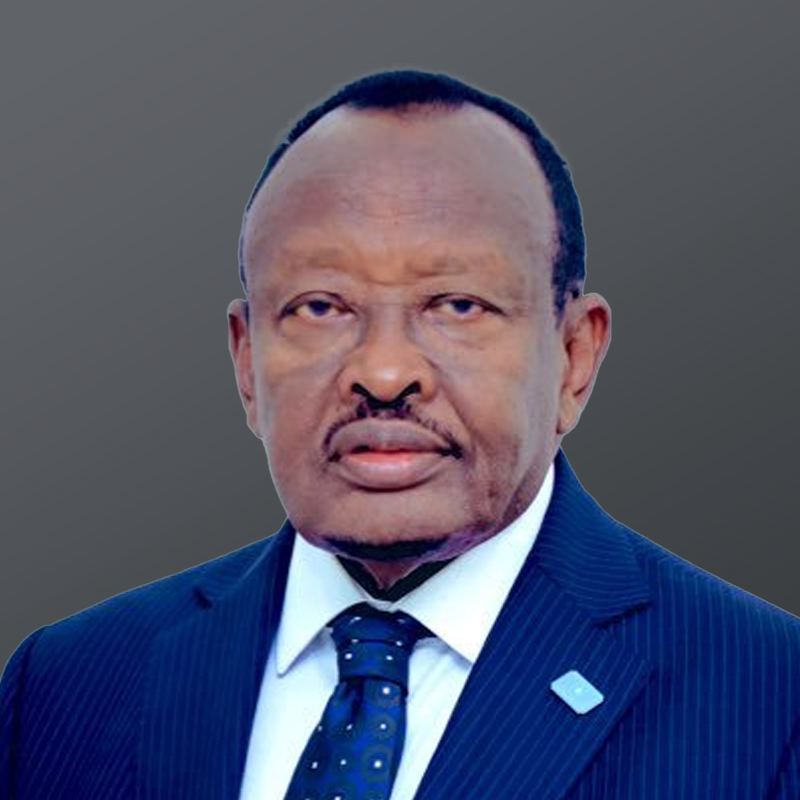
H.E. Lt. general Bashir M. Jama
Minister of Environment and
Climate Change

Dr. Abdullahi Khalif
Somalia NDC Country
Facilitator

A. Camponogara
UNFCCC, RCC Africa

Catherine Diam-Valla
Global technical advisor,
Climate Change, UNDP

Amr Sobhy
Senior Climate Change Specialist,
Islamic Development Bank
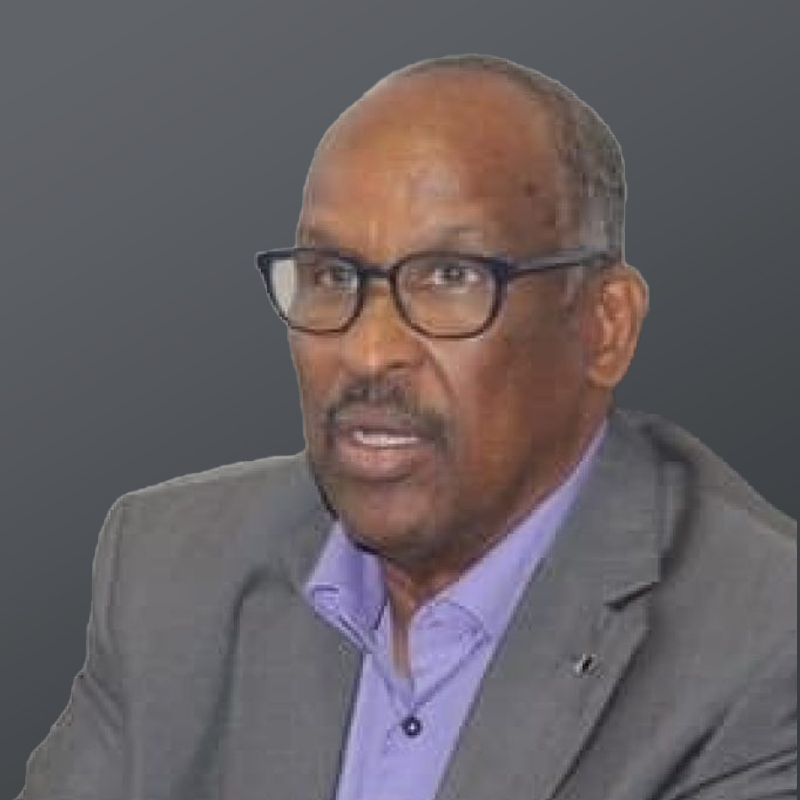
Abdullah G. Barre
Principal Advisor,
MoECC, FGS
Moderator

Rebecca Nadin
ODI
Background
Building on the successful submission of Somalia’s NDC 3.0, the Federal Government of Somalia will officially launch its Long-Term Low-Emission Development Strategy (LT-LEDS) during COP30 in Belém. The LT-LEDS marks the country’s strategic shift from medium-term targets to a longterm, transformational pathway that integrates mitigation, adaptation, and development priorities in line with the Paris Agreement Article 4.19.
Somalia’s LT-LEDS provides a forward-looking roadmap to achieve sustainable economic growth while progressively reducing greenhouse-gas emissions. It sets out sectoral transition pathways across agriculture, forestry, energy, transport, and waste management guided by principles of inclusivity, resilience, and climate justice. The strategy and the vision complement
and operationalises the NDC 3.0 Investment Plan (2025–2035) and the forthcoming National Climate Finance Strategy. Although Somalia contributes less than 0.98% of global emissions, its emissions could increase by 56% by 2035 under a business-as-usual trajectory. The LT-LEDS therefore outlines priority investments and financing mechanisms for a just low-emission transition, with an estimated requirement of USD 5.17 billion over the next decade to advance renewable energy, climate-smart agriculture, forest conservation, waste-to-energy, and circular-economy systems.
This high-level side event will convene Somalia’s leadership, development partners, donors, MDBs, private sector, and technical experts to present the LT-LEDS vision and highlight opportunities for investment and collaboration. By linking the LT-LEDS with the NDC, National Adaptation Plan (NAP), and National Transformation Plan (2025–2029), the event will demonstrate how fragile and climate-vulnerable states can chart long-term, low-carbon prosperity while reinforcing peace, inclusion, and stability.
In Focus
- Official launch of the Somalia LT-LEDS, defining long-term decarbonization and resilience pathways to 2050.
- Presentation of the LT-LEDS Roadmap and priority sectors for phased implementation (2026–2050).
- Financing strategy to mobilize USD 5.17 billion through blended finance, concessional capital, carbon markets, and diaspora climate investment.
- Strengthened alignment between the LT-LEDS, NDC 3.0, NAP, and National Climate Finance Strategy, creating a coherent policy architecture for implementation.
- Launch of a Somalia WGEO Partnership Platform for long-term low-emission transition support.
- Reinforcement of Somalia’s leadership among LDCs in advancing transparent, inclusive, and evidence-based long-term climate planning.
Advancing Ndc Finance for Implementation Across Arab States
Panel Members

Amgad Elmahdi
Regional Manager for MENA
Region, Green Climate Fund
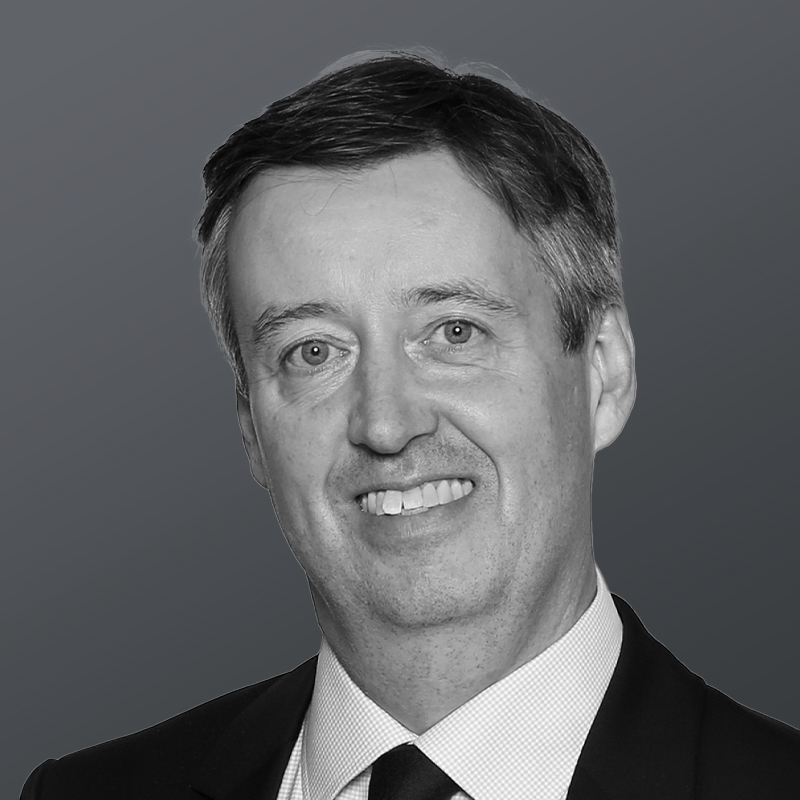
Thomas Eriksson
Director, Department of the Eastern
Europe, Central Asia, and the Middle
East Region, GCF

Thomas Beloe
Director Sustainable
Finance Hub, UNDP

Jaweher Ben Amor
Ministry of Finance, Public Services
Advisor and Director General at the
General Directorate of State Budget
Management, Tunisia

Eng. Belal Shqarin
Director of Climate Change
Directorate, Ministry of Environment,
Jordan

Ralien Bekkers
Deputy to the Dutch Finance Minister
and Co-Chair of the Coalition of
Finance Ministers for Climate

Dr. Daouda Ben Oumar Ndiaye
Lead Climate Change Expert,
Islamic Development Bank (IsDB)
Moderator

Thomas Pitaud
Regional Team Leader Climate Change
and Environment Arab States, UNDP
Background
The Arab States stand at a critical juncture in their climate trajectories. With the recent submission of the third-generation Nationally Determined Contributions (NDC 3.0), supported by the Green Climate Fund (GCF) and UNDP, countries across the region are signaling stronger ambition and clearer pathways toward achieving their climate and development goals. Yet, turning these commitments into tangible results requires one essential component: the ability to mobilize, manage, and track climate finance effectively.
Despite steady progress in national policy alignment, the financing gap remains profound. The Arab States collectively require upwards of USD 600 billion by 2030 to meet their NDC targets, but since 2015, only 1.36% has been mobilized ($8.1 billion). Per capita financing flows to the region have declined substantially since 2014. This shortfall is not just a matter of numbers, it directly shapes the region’s capacity to adapt to rising temperatures, diversify its economies, and protect vulnerable communities from the escalating impacts of climate change.
In countries facing fragility or conflict, the challenge is even more acute. While crisis contexts represent almost half the population of Arab States mobilizing climate finance, and have the greatest financing needs they secured only 14% of flows to the region. Efforts to restore economic stability often increase pressure on already limited natural resources, accelerating environmental degradation and undermining resilience. Deforestation, the loss of carbon sinks, and unsustainable resource use can, in turn, heighten greenhouse gas emissions and deepen social and economic vulnerabilities. Climate change in such contexts acts as a risk multiplier, exacerbating tensions over water and land, disrupting livelihoods, and threatening peace and stability. The Arab region, already one of the world’s most water-scarce and food-import dependent, is particularly vulnerable to these cascading impacts, with the poorest and mostfragile communities bearing the greatest burden.
Yet, the region also holds immense potential. With over USD 4.5 trillion in banking assets and five of the world’s largest sovereign wealth funds, financial resources to drive climate action already exist within the region. The challenge is not a lack of capital, but rather the absence of mechanisms to channel these funds efficiently and equitably toward climate priorities.
Currently, only nine Arab States have costed NDCs, and few countries have developed financing strategies or integrated these into medium-term fiscal planning and annual budget processes. Moreover, there is no regional monitoring, reporting, and verification (MRV) system to consolidate data on climate finance flows, needs, and results. The lack of coordinated tracking limits policy coherence, transparency, and the ability to design robust investment frameworks that align finance with measurable impact. Ministries of Finance will need to serve as an essential partner to Ministries of Environment and Planning in developing innovative financing strategies, ensuring fiscal coherence with planning and NDC commitments, for effective delivery and allocation of climate finance.
To accelerate progress, Arab States can leverage this moment to strengthen the foundations of climate finance governance. NDC commitments and financing should be effectively integrated into medium term fiscal strategies and budget circulars. Budget tagging can track public spending on climate commitments. Building national and regional MRV systems would enable countries to track financial flows and assess the effectiveness of climate investments. Expanding public–private partnerships and creating fiscal space for de-risking guarantees can unlock private capital for renewable energy, adaptation, and resilience projects. Additional instruments, such as green bonds, climate-focused structured finance instruments, and specialized impact funds, offer untapped potential to scale finance in line with NDC priorities.
Moreover, Ministries of Finance should partner with Ministries of Environment and Planning to articulate economic vision for the future – and to quantify the socioeconomic net benefits of a low-carbon future. Targeted investments in food systems, water security, and low-carbon infrastructure would not only advance climate goals but will also create jobs, invite technological leaps, and create healthier, inclusive economic growth and circular economies. Integrating climate finance with humanitarian, youth, and gender strategies can generate cobenefits and strengthen social resilience. Macroeconomic models of the fiscal risks presented by climate change can also underscore the urgency to act now.
In Focus
The 90-minute event on the margins of COP30 will serve as a space to present the results of a forthcoming report stocktaking progress in the region on climate finance and fiscal policy alignment, and examining the role Ministries of Finance need to play as partners to Ministries of Environment and Planning in delivering on NDCs in the region. It will provide a space for exchanging good practices among practitioners and decision makers, and explore the role regional institutions and initiatives could offer in scaling up climate finance solutions for the Arab States.
The objectives of the side event are:
- Present the results and key recommendations from UNDP’s forthcoming stocktaking report on climate finance in the Arab States
- Discuss lessons learned, success factors and key barriers on climate finance (tracking) and scaling up in the Arab States
- Stimulate discussions among policy makers and practitioners on the role regional institutions can offer promoting the alignment of fiscal policy and leveraging regional resources for climate action
Climate-Smart Agriculture for Food Security and Nutrition
Panel Members

Max Müller
Senior Vice President,
Bayer AG

Aakash Manaswi
Internationally Invited Student
Researcher & Presenter,
African Climate Change Research Centre

Dr Satish Kumar
President & ED,
Alliance for an Energy Efficient
Economy (AEEE)

Abdikadir Dakane
National Director,
SOS Children's Village
Moderator

Hani Tohme
Partner, MEA Sustainability Lead,
Kearney
Background
Agriculture is both highly vulnerable to climate change and a significant contributor to global greenhouse gas emissions. Rising temperatures, shifting rainfall patterns, and extreme weather events are already reducing yields, threatening food security, and putting additional pressure on nutrition, especially in regions dependent on smallholder farming. At the same time, agriculture accounts for around one-third of global emissions, largely through deforestation, methane from livestock, and inefficient fertilizer use. This dual challenge underscores the urgent need for climate-smart agricultural solutions that simultaneously support resilience, reduce emissions, and ensure food security.
The concept of climate-smart agriculture (CSA) has emerged as a critical framework for addressing these intersecting challenges. By promoting sustainable land management, integrating renewable energy into agricultural systems, and adopting resource-efficient practices, CSA can safeguard livelihoods and nutrition for billions of people. COP30 provides a unique opportunity to highlight the role of agriculture in driving both climate mitigation and adaptation while aligning food systems with the objectives of the Paris Agreement.
In Focus
This session will explore practical pathways for advancing climate-smart agriculture to secure food supplies and improve nutrition outcomes in a changing climate. Panelists will highlight innovations such as resilient crop varieties, regenerative farming methods, precision agriculture, and the use of digital technologies to optimize resource use. Attention will also be given to the importance of equitable access to finance, technology, and markets for smallholder farmers – particularly women and youth – who are at the frontline of both food production and climate impacts. By showcasing success stories and policy innovations, the discussion aims to build momentum for transforming global food systems into engines of sustainability, resilience, and health.
Questions for Panel Discussion
1. What agricultural innovations are most effective in promoting both food security and climate resilience?
- How can climate-resilient crops and livestock systems be scaled across vulnerable regions?
- What role does regenerative agriculture play in restoring soils and enhancing productivity?
- How can digital and precision farming tools reduce waste, optimize water use, and improve yields sustainably?
2. How can farmers – especially smallholders – be empowered to adopt climate-smart practices?
- What financial instruments (insurance, credit, subsidies) can lower the barriers to CSA adoption?
- How can governments and partners strengthen extension services to build local technical capacity?
- What policies ensure that women, youth, and marginalized groups have equitable access to CSA resources and markets?
3. How can food systems be transformed to deliver both climate benefits and nutrition outcomes?
- What strategies align agricultural practices with nutrition-sensitive food policies?
- How can public procurement and value chain reforms drive demand for sustainable and nutritious food?
- What role can global cooperation play in integrating CSA into trade, investment, and food security frameworks?
A Care-Centred Just Transition: Challenges and Opportunities
Panel Members

Carolina Robino
Senior Program Specialist,
Canada’s International
Development Research Centre
(IDRC)

Zoe Brent
Senior Research Specialist,
Environmental and Climate
Justice Programme, UNRISD

Mariama Williams
Senior Strategic Advisor,
Global Afro Descendant Climate
Justice Collaborative

Georgia Haddad Nicolau
Executive Director,
Procomum
Moderator

Ana Carolina Querino
ONU Mulheres
Background
Current just transition frameworks often prioritize formal employment in carbon-intensive sectors such as energy, manufacturing, and transport. This narrow focus overlooks the foundational role of care work in sustaining human wellbeing and ecological balance. Care systems encompass the policies, services, resources and social relations that enable the provision, access and valuation of care across societies. Their ability to absorb shocks, support health and social reproduction, and strengthen community ties makes them indispensable in both climate adaptation and the pursuit of more just and sustainable economies. However, care systems remain structurally undervalued and underfunded, particularly in contexts marked by gender inequality and informality. Informal workers – especially those in care roles – remain largely invisible in climate policy and financing, despite representing the majority of the global workforce (UNRISD, 2023). However, feminist, Indigenous, peasant, and climate justice movements have long argued that care systems – comprising caregiving labor, infrastructures, and community networks – are central to socioecological transformation.
The Climate-Care Nexus conceptual framework by UNRISD and Wits University, supported by IDRC, demonstrates how climate change exacerbates care burdens and weakens care systems, while also showing how robust care systems can enhance climate resilience and
adaptation. The IDRC-supported briefing paper on climate finance for care, co-authored by Mariama Williams, further argues that care must be recognized as climate infrastructure. It calls for reforms to global climate finance mechanisms – including the Green Climate Fund (GCF), Adaptation Fund (AF), and the Fund for Responding to Loss and Damage (FRLD) – to explicitly fund care systems and include care actors in governance and decision-making. And a new report on Just Transition and Care by UNRISD and the Just Transition and Care Network invites us to rethink the just transition framework based on the experiences, perspectives and demands of care workers (both waged and unwaged) and their organizations.
In Focus
This session will highlight the central role of care work (both paid and unpaid, formal and informal) as essential social infrastructure that sustains life, communities, and ecosystems in the face of escalating climate crises. It will explore how centering care in just transition strategies not only addresses historical gender inequalities but also expands the scope of climate policy towards inclusive, resilient, life-sustaining economies.
This session contributes to a growing movement to reframe just transition agendas through the lived experiences and demands of care workers and their organizations, and to recognize care systems as essential to sustaining life, wellbeing and resilience in the face of intersecting social and ecological crises. It seeks to reclaim the original emancipatory spirit of just transition by embedding care as a strategic pillar of climate justice.
Objectives
- Reframe just transition frameworks to include care systems as critical infrastructure for climate adaptation, mitigation, and social resilience, especially in Global South contexts.
- (Elevate the voices and knowledge of community and care workers – paid and unpaid, formal and informal – as central to shaping gender-transformative and inclusive climate policies.
- Bridge climate and care agendas by fostering dialogue among researchers, policymakers, and care organizations to identify entry points for integrating care into national just transition plans, international climate finance, and green recovery strategies.
- Raise awareness of the structural undervaluation of care work, particularly in informal and unpaid forms, and its implications for climate justice, gender equality, and economic resilience.
Expected Outcomes
- Strengthened recognition of care as climate infrastructure in policy and financing debates.
- Identification of policy levers to integrate care into climate finance mechanisms, including through dedicated funding windows, care-responsive metrics, and inclusive governance reforms.
- Enhanced collaboration between feminist movements, care organizations, and climate actors to co-create care-centered climate solutions and recommendations for embedding care into COP30 agreements and GCF replenishment.
From Fake News to Fair Play: Tackling Climate Misinformation with Football and AI
Panel Members

Guilherme Canela
Director of Digital Inclusion
and Policies and Digital
Transformation, UNESCO

Frederico Assis
Frederico Assis
Special Envoy for Data Integrity
COP30

Prof. Gail Whiteman
Impact Professor at University of
Exeter (Nature and Climate Impact
Team) and founder of the Arctic
Basecamp and the Climate
Basecamp

Thais Lazzeri
Investigative Journalist,
Founder and Director,
FALA Estúdio de Impacto
Moderator

Marcos Oliveira Jr
Research Impact Fellow,
University of Exeter / Nature and
Climate Impact Team
Background
As climate impacts intensify, the public’s understanding of science and solutions becomes crucial for effective action. Yet, misinformation and disinformation about climate change continue to spread rapidly, undermining trust, delaying policies, and weakening collective action. Culture from sports, media, and technology sectors can play transformative roles in reshaping narratives and restoring trust. “From Fake News to Fair Play” explores how AI, communication strategies, and cultural storytelling can shift the conversation from confusion to collaboration.
In Focus
This session brings together experts from academia, journalism, policy, and global institutions to discuss how AI can help identify, counter, and replace climate misinformation with fair, engaging, culture and evidence-based communication. The session will also mark the launch of ClimaVAR – an innovative AI-powered tool designed to detect, classify, and explain climate misinformation using football language.
Questions for Panel Discussion
1. How can AI be leveraged to detect and counter climate misinformation?
- What AI tools can collaborate for content verification?
- How can data transparency and ethical design ensure that technology builds, rather than erodes, public trust?
2. How can football and sports culture improve climate communication?
- How can the cultural language of sports (competition, fair play, and collective goals) help translate complex scientific issues for the public?
- How can tools like ClimaVAR connect the emotional and cultural power of football with accurate, science-based climate communication?
3. What roles can global institutions and cultural leaders play in promoting “fair play” in climate communication?
- How can partnerships between governments, tech companies, and media organizations support accurate information flows?
- What opportunities does COP30 present for launching coordinated international action against climate misinformation?
Engineering a Novel Electronic, Ai-Based Bait System for Eco-Friendly, Green Pest Management Towards the Global Honey Bee and Pollinator Crisis (Year 5)
Panel Members

Aakash Manaswi
First-author publication on
eco-friendly bee pest control

Atreya Manaswi
One Health and climate-health
researcher
Background
Pollinators underpin global food systems: one in three bites of food depends on them. Climate stressors including heat waves, drought, and shifting bloom times have compounded existing threats like parasites, pesticides, and habitat loss, destabilizing bee health and, downstream, nutrition and livelihoods. Framing bees within a One Health lens links ecosystem integrity, agricultural resilience, and human health outcomes. Youth-led innovation and field-based partnerships can accelerate scalable, low-cost solutions that both protect pollinators and strengthen climate adaptation for growers.
In Focus
This session spotlights two complementary youth research programs and their policy relevance:
- Mitigation & Adaptation Technology: Aakash Manaswi’s development of an eco-friendly CO₂-based approach targeting Varroa mites, in collaboration with USDA, the University of Florida, and 3M – advancing non-chemical control pathways and resilience for beekeepers.
- One Health & Community Impact: Atreya Manaswi’s work connecting pollinator health to climate-sensitive nutrition, rural livelihoods, and behavioral interventions – translating bee monitoring and management into community health and food security outcomes.
This discussion will translate research into policies and practices: climate-smart apiary management; phenology-aware planting; youth innovation pipelines; and financing mechanisms for pollinator-positive agriculture.
Questions for Panel Discussion
1. Climate-Smart Pollinator Protection
- How can apiary management adapt to heat, drought, and phenology shifts while minimizing chemical dependence?
- What safeguards and validation steps are required to scale eco-friendly Varroa controls?
2. From Bee Health to Human Health
- In what ways does pollinator decline translate into nutrition and public-health risks (e.g., micronutrient gaps)?
- How can health and agriculture ministries coordinate to incorporate pollinator metrics into climate and health planning?
3. Data, Early Warning, and Local Capacity
- What monitoring frameworks (IoT/AI, community science) best predict climate-driven bee stress and crop pollination risk?
- How can extension services and youth programs equip beekeepers and farmers with actionable, locally tailored insights?
4. Finance and Policy for Scale
- Which incentives (crop insurance, procurement standards, climate-smart subsidies) can mainstream pollinator-positive practices?
- How should regulators evaluate novel treatments to ensure safety, access, and rapid diffusion to smallholders?
© 2025 WGEO- World Green Economy Organization. All Rights Reserved.